Senate Confirms Michael Selig to Lead CFTC

By Robert Linnehan in Industry
Updated: September 18, 2026 at 4:31 pm EDTPublished:
- The Senate late Thursday voted to confirm Michael Selig as chairman of the Commodity Futures Trading Commission
- Selig will lean on courts regarding his opinion to sports event contracts
- He will likely be the only commissioner of the CFTC when he assumes the position
The Commodity Futures Trading Commission will finally have a new chairman.
The U.S. Senate late Thursday voted to confirm nominee Michael Selig as chairman of the Commodity Futures Trading Commission (CFTC). President Donald J. Trump (R) nominated Selig to chair the CFTC after former candidate Brian Quintenz was no longer considered for the position.
The Senate approved Selig’s nomination as part of SR 532, which decided the fate of 97 various nominees appointed by President Trump, by a 57-43 vote.
CFTC Finally Has a Chair
Selig, the current chief counsel of the SEC’s Crypto Task Force and senior advisor to the chair, will likely be the only commissioner when he assumes his role with the CFTC. The only current commissioner is acting chairwoman Caroline Pham, who said she will step down from her role when Selig comes aboard.
Former commissioners Summer Mersinger and Christy Goldsmith Romero both left the CFTC this past May, while Kristin Johnson left in August.
Selig will have an immediate impact on the way the CFTC regulates prediction markets, and especially sports event contracts.
Brokerages offerings sports event contracts have long maintained that prediction markets can only be regulated by the CFTC and states have no say in their offerings. Kalshi CEO Tarek Mansour and Kalshi officials have noted their sports event contracts differentiate from traditional sports betting as they are not played “against the house,” but traded between users who purchase contracts on either side of an outcome.
State gaming regulators maintain the markets need to be beholden to regulations, taxes, and license fees that sports betting and gaming operators are required to follow.
Looking to Courts for Sport Event Contracts
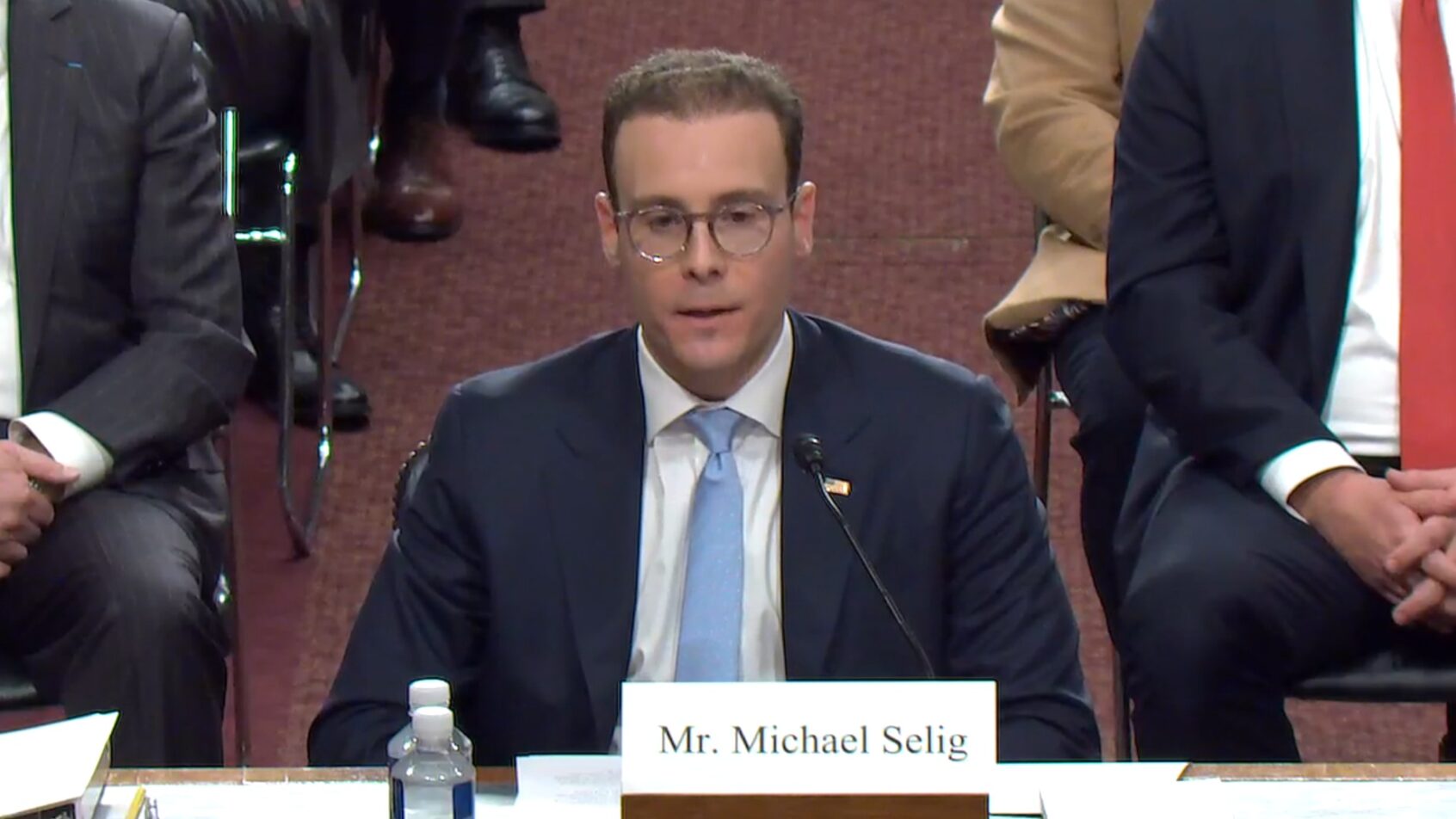
During a nomination hearing in November in front of the U.S. Senate Committee on Agriculture, Nutrition, and Forestry, Selig revealed he will depend on the courts, ongoing litigation, and Congress regarding the CFTC’s role in regulating sports event contracts.
Selig, the current chief counsel of the SEC’s Crypto Task Force and senior advisor to the chair, made it clear during his hearing that he would depend on court opinions to determine the CFTC’s role in regulating the sports event markets.
Minnesota Sen. Tina Smith (DFL) said during the hearing that current CFTC regulations “clearly prohibit event contracts related to gaming from being offered.” If confirmed, she asked, can Selig commit to enforcing the prohibition?
The question, Selig said, is a complex one.
“As someone who has spent many years practicing law at law firms as well as studying the law at law school, these are complex issues as to interpretation of what it means to constitute gaming. Of course, I have the utmost respect for judges that are working on these issues in the court systems. I intend to always adhere to the law and follow what judicial decisions tell me to follow. I also believe that these types of issues are ones we can work through together. Some of them are Congressional issues, as to whether we change statutes in certain areas…these are just very challenging, interpretive questions I will look to the courts on,” he said.
Selig would answer several questions regarding sports event contracts in the same way during the hearing. California Sen. Adam Schiff (D) asked Selig outright for his personal opinion regarding sports event contracts, asking him to put aside his answer on waiting for court decisions on the issue.
The nominee said it would be irresponsible for him to do so.
Regulatory Writer and Editor
Robert Linnehan covers all regulatory developments in online gambling and sports betting. He specializes in U.S. sports betting news along with casino regulation news as one of the most trusted sources in the country.