Understanding Micro-Betting, the Most Controversial Sub-Sector of US Gaming

Updated:

I’ve been micro-betting on sporting events for much longer than I’ve had access to sports betting apps, and chances are that you have too.
“I bet the Lions score a touchdown on this next play.”
“How much do you want to bet Justin Verlander strikes out the next batter?”
Sometimes there was a buck involved. Sometimes it was just for a brief moment of pride. But predicting the result of the next outcome in a sporting event is nothing new.
Now, thanks to advances in technology and the expansion of legal online sports betting in the US, it has boomed into big business, making sports betting operators billions of dollars.
While it’s hit some speed bumps along the way, and has a cloudy future thanks to responsible gaming concerns, pending legislation and recent betting scandals, micro-betting is a very big part of sports betting, and the sports viewing experience in general.
What is Micro-Betting?
Micro-betting at online sportsbooks is a form of live betting in which you wager on immediate events during the game as opposed to its ultimate outcome. This can include the outcome of the next drive in a football game, the next pitch in a baseball game, next point in a basketball game, etc.
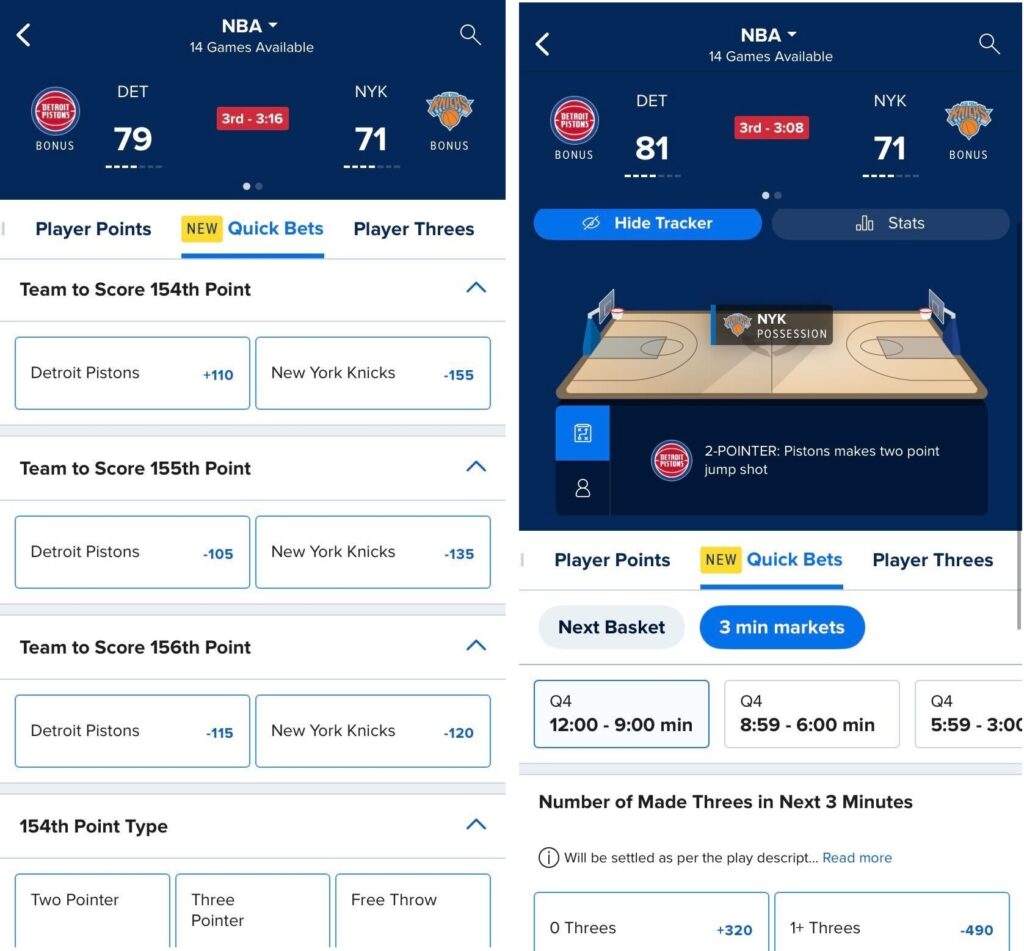
It was the natural next step as live betting continued to improve at sports betting apps, and our attention spans continued to shrink.
Jake Paul’s Betr famously was going to take over the micro-betting space, but did not. Now you can find micro-betting options at your favorite major betting apps.
Regulations on Micro-Betting
The early excitement surrounding micro-betting was quickly met with trepidation, both surrounding its potential negative impacts on bettors, and the ease with which it could be manipulated.
Because of that, steps have been taken by leagues, states and now even the federal government to rein it in.
How the SAFE Bet Act Would Impact Micro-Betting
The SAFE Bet Act could have massive effects on the sports betting industry overall, but it could essentially end micro-betting.
A provision in the bill would ban the use of AI in creating gambling products, specifically targeting microbets.
Without the use of AI, it would be almost impossible to pull off for sportsbooks, as it instantly creates live odds to serve to bettors.
The SAFE Bet Act is currently in very early stages after having been reintroduced by Sen. Richard Blumenthal (D-CT) and Rep. Paul Tonko (D-NY).
MLB Micro-Betting Bans
Major League Baseball was hit with a scandal in 2025, as pitchers Emmanuel Clase and Luis Ortiz were accused of manipulating pitches to influence betting outcomes.
Betting scandals are certainly not new to baseball, but manipulating some pitches is a much different animal than throwing or fixing an entire game, specifically in how much easier it would be pull off the former.
In response, the MLB put restrictions on micro-betting, specifically asking sports betting operators to cap single-pitch bets at $200, and banning them from being included in parlays.
A move like this does not affect 99% of bettors, as most people are not betting more than $200 on pitch-level microbets. But it does make it essentially worthless for a pitcher to manipulate the market, as the risk highly outweighs the reward.
Technology That Drives Micro-Betting
For micro-betting to find any success it needs two things: speed and accuracy. Recent developments in technology such as AI advances and more powerful smart phones have done the heavy lifting in achieving those two things.
Here’s a look at some of the tech behind the micro-betting boom:
- AI and Machine Learning: Since microbets must be created ultra fast during a game, they require an AI algorithm to build. Human traders are fantastic at their jobs, and use computer models to help inform their odds, but not at that speed and that many times during a game. With improvements to AI, it can create odds for the smallest of outcomes based on real-time data, historical statistics, player performance and more, all in seconds. If you’re interested in learning more about AI and sports betting, make sure to check our guide on how to use AI for sports betting.
- Improved Real-Time Data: The data being fed into those algorithms has to be of the highest quality, while still being instantly available. Thanks to low-latency data feeds, that is possible. Data firms, Sportradar foremost among them, have partnered with leagues and sportsbooks to provide this data accurately and without delay.
- Mobile-Optimized Betting Platforms: Improvements in the betting apps on your phone make it possible, not only for sportsbooks to get you those markets quickly, but also allow you to make your bets. You can go from your home screen to making a bet within 15 seconds on some apps, and if you’re following along with an app open during a game, it takes just seconds to tap your bet, enter your wager and confirm your bet.
- Automated Risk Management: Upgraded algorithms also allow sportsbooks to monitor the action that is coming in on this microbets in real time. This not only allows them to detect potential fraudulent activity, but also compulsive gambling activity, and send warning messages to bettors.
Streaming Television Hurts Micro-Betting
Interestingly, the rise of micro-betting has come alongside the rise of streaming services for live sporting events.
Traditional broadcast and cable TV had a latency of around five seconds, while streaming apps like Hulu and YouTubeTV can be anywhere from 20 to 45 seconds, even at their fastest.
That can make a major difference when trying to match up your live micro-betting with watching the game. For many bettors, actually watching the game to inform their bets is a major piece of the experience.
Too often, though, the live betting display on your sports betting app will be ahead of the game you’re watching on a streaming service, which not only makes betting on the next outcome difficult, but also spoils the game for you.
How Micro-Betting Affects Bettors
The arguments against micro-betting include the potential dangers it creates for bettors. With any fast-paced, quickly resolved wagers, you run the risk of losing a lot of money in a short amount of time.
Opponents of micro-betting have argued it’s essentially a sports betting slot machine, and the Tik-Tokification of sports betting can be dangerously addictive, as it produces instant results and is constantly providing you with the next betting opportunity.
It’s also easier to get stuck chasing your losses while making microbets, as the potential next win is right there in front of you. In that sense, it is a lot like a slot machine, just without the random number generator deciding your outcome.
While the automated risk-management mentioned above can identify and alert bettors to potential dangers, that still requires them to moderate their activity themselves, or to set limits ahead of time.
At the same time, if done responsibly, micro-betting can be a fun way to follow along with a game. Wagers are typically small on microbets, so there is a low barrier to entry for bettors who don’t want to sweat out a $50 bet on the full game.
Like with any form of gambling, it’s important to do it safely. That means setting limits, both on your bankroll and time, and never betting more than you can afford to lose.
If you or someone you know is struggling with gambling addiction or showing signs, utilize the responsible gambling tools within your state, or call 1-800-GAMBLER for assistance.
The Future of Micro-Betting
Where micro-betting will go from here will depend a lot more on the SAFE Bet Act and potential action of major sports leagues than anything else.
If it passes as written, the SAFE Bet Act would essentially end micro-betting with its AI ban.
More manipulation of micro-betting markets by current athletes wouldn’t likely be a death knell for the practice, as the MLB cap could become the model to combat that. But if that doesn’t work, you could see leagues take stronger stances and try to ban it all together.
Since sportsbooks rely on the real-time data from leagues to inform their odds, they would certainly comply with those requests.
If it survives those things, micro-betting will continue to become a major part of the sports viewing experience.
Whether it’s sitting around your living room with friends or at the stadium watching the game, getting in on the action throughout the game can enhance that experience, as long as it’s done safely.
Evergreen Writer/Editor; Sportsbook Expert
With nearly two decades of experience in sports media, Paul Costanzo turned his professional attention to sports betting and online gambling in January of 2022. He's covered every angle of the industry since then, managing and creating content for PlayMichigan and The Sporting News, and now SBD.