CFTC Chair Selig Speaks on Sports Event Contract Enforcement, Potential Conflicts of Interest During House Committee Hearing

By Robert Linnehan in Industry
Updated: September 18, 2026 at 4:29 pm EDTPublished:
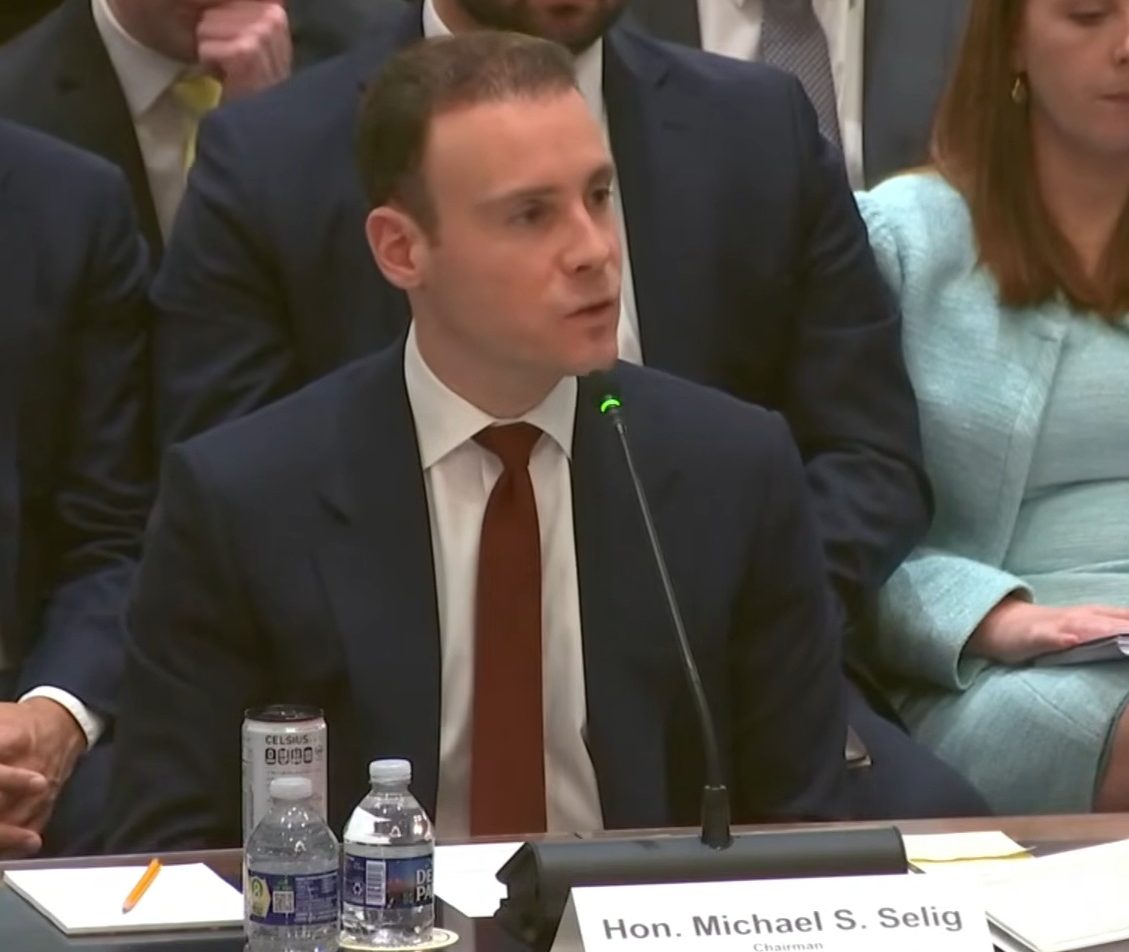
- CFTC Chair Michael S. Selig spoke on insider trading enforcement, sports event contracts, and potential conflicts of interest during committee hearing
- Selig and several House Committee on Agriculture members went back and forth on sports event contracts and insinuations of conflicts of interest
- Selig reported the CFTC is engaged in numerous ongoing investigations into prediction market activity
Commodity Futures Trading Commission Chairman Michael S. Selig today faced several hours of questions from members of the House Committee on Agriculture, ranging from concerns on insider prediction market trading, potential conflicts of interest within prediction market companies, and the commission’s role in enforcing the markets.
For most of the hearing, Selig affirmed the Commodity Futures Trading Commission has a “zero tolerance policy” when it comes to insider trading, market manipulation, and fraud when it comes to the prediction markets it regulates.
“I want to be crystal clear. To anyone who engages in fraud, manipulation, or insider trading in any of our markets, we will find you, and the full force of the law will come to bear,” he said.
Facing Criticism Over Sports Event Contracts
As expected, Selig faced numerous questions regarding the CFTC’s role in regulating the uber-popular sports event contracts that Designated Contract Markets now offer to customers.
Congressman Jim Costa (CA-D) had harsh words for the CFTC’s role in regulating sports event contracts and other contracts related to war, death, and politics. Sports event contracts, specifically, he said, are undercutting tribal governments and harming states that have rejected the expansion of online sports betting, such as California.
These contracts are not harmless, he said, and are just gambling by another name.
“I don’t believe Congress intended sports wagering to be repackaged as a financial product,” Costa said.
Congressman Gabe Vasquez (NM-D) agreed, reporting that prediction market companies exploiting federal loopholes to offer unregulated sports betting undermines tribal gaming sovereignty and state sports betting regulations.
Vasquez showed Selig a visual of two similar sports betting offerings, asking the chairman to identify which from a regulated sportsbook and which was a sports event contract. Selig said he could not, but also said there are “many risks that could be hedged” on prediction market sites, which differentiates the offerings from gambling.
That is the problem, Vasquez noted, as consumers also can not tell the difference between regulated sports betting and sports event contracts, “though the purpose of the activity is exactly the same.”
“If the product looks like sports betting, the public should expect sports betting type protections and regulations. At the end of the day this comes down to a simple question, are we regulating real economic risk, or are we allowing prediction markets to steal billions of dollars in an unregulated free-for-all with no consumer protections as Congress and the CFTC turns a blind eye? The CFTC should focus on ensuring the integrity of the derivatives and commodities markets, ensuring that farmers and businesses receives fair prices and protections, and preventing our country from facing another financial crisis. That should be the focus,” Vasquez said.
Congressman Lambasts Trump Family Involvement
Congressman Jim McGovern (MA-D) criticized the CFTC’s lack of involvement for an obvious case of insider trading and market manipulation.
McGovern pointed to Donald Trump Jr.’s employment as an advisor for Kalshi and involvement with Polymarket. His involvement as an advisor to two prediction market companies should absolutely be raising eyebrows in the CFTC, he said, but nothing has yet to be done on his employment.
At one point of the hearing, McGovern asked Selig if anyone from the White House had ever approached the CFTC to drop its probe into Polymarket.
“We treat all market participants alike. We do not pick winners or losers, engage in favoritism, or bring politics into these matters. We take them very seriously and I think it’s insulting you’re insinuating we play in political games,” Selig said in response.
Undeterred, McGovern pointed to several instances in the past month of prediction market users making money on purchased prediction market contracts, taking advantage of potential insider information from the White House. One user, McGovern said, purchased several contracts on the future of gas prices mere minutes before President Donald Trump (R) reported on Truth Social that the U.S. had agreed to a cease-fire with Iran.
These are decisions made at the highest level of the White House, McGovern said, decisions few know about until the president reveals them.
“I believe this president is using public power for private profit. I believe he and his family are lining their pockets with insider information. I think Donald Trump Jr. is trading his access for money. I think it’s the definition of corruption, and I think your actions to deregulate this market are helping them do it. I think it is wrong, and I think it’s something this committee needs to pay much more attention to,” he said.
CFTC Investigations Ongoing
Selig revealed the CFTC is currently engaged in numerous investigations into prediction market activity, but declined to give a specific number to the committee.
“Whether it’s in the hundreds or thousands ongoing, I can’t speak to the specific number,” he said.
When asked if any fraud had been revealed during these investigation by Congressman Salud Carbajal (CA-D), Selig declined to speak on the specific investigations or provide details on the investigations.
The CFTC is investigating instances of insider trading, manipulation, and fraud in these markets like any other, he said.
“The exchanges are doing the same. I believe Kalshi has now called out two instances of insider trading, market manipulation, in their markets and has fined participants in those markets,” Selig said.
Kalshi identified the two instances of insider trading in February. The first concerned a candidate for Governor in California who traded $200 on his own candidacy, who then received a five-year ban plus a financial penalty of 10-times his initial trade size. The second instance concerned an insider who traded $4,000 on YouTube streaming markets, receiving a 2-year suspension plus a financial penalty of five-times the initial trade size.
Regulatory Writer and Editor
Robert Linnehan covers all regulatory developments in online gambling and sports betting. He specializes in U.S. sports betting news along with casino regulation news as one of the most trusted sources in the country.