CFTC Reaffirms Regulatory Authority, ‘Rules of the Road’ For Prediction Markets During Innovation Meeting

By Robert Linnehan in Industry
Updated: August 21, 2026 at 9:15 am EDTPublished:
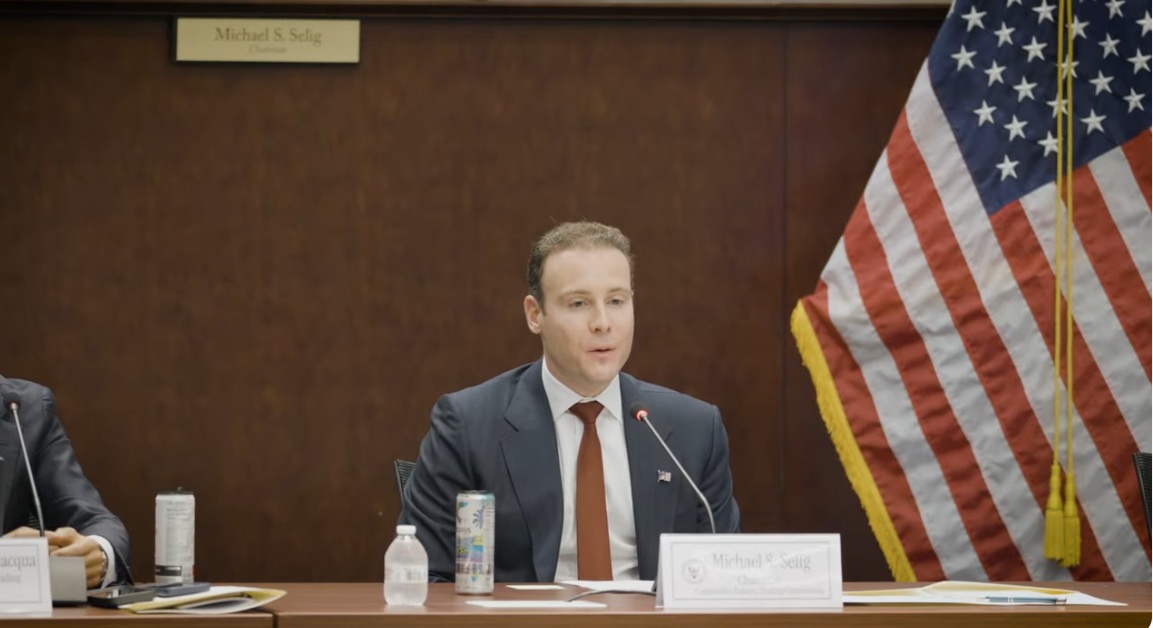
- The Commodity Futures Trading Commission today held its inaugural innovation advisory committee meeting
- The committee meeting touched on the future of artificial intelligence, the crypto industry, and prediction markets
- The commission reaffirmed its authority over prediction markets and noted it will establish clear rules of the road
Commodity Futures Trading Commission Chair Michael S. Selig reaffirmed the commission’s regulatory authority over prediction markets and promised “clear rules of the road” for the markets moving forward during today’s inaugural innovation advisory committee meeting.
The Commodity Futures Trading Commission (CFTC) today hosted a nearly four-hour meeting in which artificial intelligence, crypto currency, and prediction market industry leaders gathered to discuss challenges facing their respective market sectors.
The CFTC dedicated the final hour of its meeting to prediction markets, in which Selig promised a “roadmap” and clear rules for DCMs from the commission moving forward.
Rules of the Road
Selig opened his prediction market comments by criticizing the CFTC’s former administration for failing to institute a “comprehensive regulatory framework to address the unique policy considerations associated with these products.”
“Instead, prior administrations put their heads in the sand, thinking that the markets would go away, and, when that failed, tried to outlaw the products entirely,” Selig said.
However, Selig promised those in attendance that the CFTC will no longer take this approach.
The CFTC, Selig said, has already proposed an amendment to CFTC Rule 40.11, giving the commission the discretion to prohibit event contracts that may be readily susceptible to manipulation. The statute, however, does not define key terms such as “gaming,” he noted, which puts contracts at risk of rejection based on “arbitrary whims or political biases.”
“The prior administration attempted to prohibit event contracts on politics, sports, and cultural events in the name of the public interest – without ever defining what is in the ‘public interest.’ Under this approach, the public is not the judge of its interest but instead whoever is in control of the commission. Our proposed amendments to CFTC Rule 40.11 are intended to address these issues by defining key terms and enumerating public interest criteria for commission consideration,” Selig said.
Secondly, Selig said the CFTC has proposed a new rule to modernize reporting framework for fully collateralized event contracts. This would establish a regulatory framework to provide the CFTC with the information it needs to monitor the markets and eliminate “unnecessary complexity and regulatory burden.”
Finally, the Selig reported the CFTC will soon propose a series of new amendments to its regulations to modernize its core principle and rules governing DCMs that list event contracts and institute protection requirements.
“We’ve heard the concerns of public commenters about inadequate consumer protections for retail loud and clear. These amendments would also establish clear expectations for product governance, market design, and incentive programs,” he said.

CFTC Has Clear Regulatory Authority
One thing is for certain, Selig and several industry leaders noted throughout the course of the meeting, is the belief that the CFTC has clear regulatory authority over prediction markets.
Luana Lopes Lara, COO and co-founder of Kalshi, said Americans love a regulated prediction market platform. The majority of market share is through onshore, U.S. based prediction platforms, she said, because American customers “like regulation and consumer protections.”
The CFTC provides these protections and regulations through a federal framework, she said, which is vastly superior than a state-by-state framework.
“I’ve never heard a single argument as to why state-by-state has better consumer protection than a federal framework. If you look at actually, if you go state-by-state, you see that very few states actually have any regulation against advertising to minors or any regulation against advertising to self-excluded,” she said.
The CFTC’s regulatory authority over the market is unambiguous, said Brian Armstrong, CEO of Coinbase. The CFTC has exclusive regulatory jurisdiction that has been affirmed by Congress.
“We appreciate you defending that authority, even in the face of litigation.”
Market Manipulation Concerns Do Exist
However, a prevailing concern from a number of attendees revolved around the potential for market manipulation of certain event contracts. Terry Duffy, CEO of CME Group, said since Jan. 1, 2025, more than 2,500 event contracts have been self-certified by DCMs and none have been opposed.
Many of these, he said, are in direct violation of the CFTC’s Core Principle 3 and are susceptible to manipulation. He pointed to recent insider-trading controversies involving international Polymarket event contract markets regarding the ousting of Venezuelan President Nicolás Maduro, a recent teleprompter operator for President Donald Trump (R) who profited off of Kalshi mention markets for the president, and a bevy of sports event contracts that can be manipulated by a single individual.
“This is not good for our industry, it’s horrible for our industry,” he said.
His comments led to several testy back and forth moments during the meeting, as Selig accused him of “fake news,” noting the Maduro contracts and teleprompter-related contracts were never offered in the American markets. Selig incorrectly believed the teleprompter contracts were only offered on Polymarket’s international platform, when in actuality they were offered by Kalshi in the U.S.
Duffy agreed with Selig that the Maduro contracts were only offered overseas, but pointed to the fact that Kalshi offered the Trump mention markets in the U.S. and sports event contracts are popular throughout the country.
Lopes Lara also fired back at Duffy for mentioning the Kalshi mention markets for the president, which led to this dialogue:
Lopes Lara: “Terry, has CME ever had any issues with any market manipulation in its history?”
Duffy: “I have more people in my regulatory department than you have in your entire company.”
Lopes Lara: “Maybe you should learn about efficiency?”
Duffy: “Maybe you should learn about credible markets?”
While he didn’t argue with anyone, Vlad Tenev, co-founder, chairman, and CEO of Robinhood, also expressed his concern for potential market manipulation for mentions contracts. While they can be a “fun” market, Tenev said they are open to vulnerability when it comes to manipulation.
Tenev said there have already been multiple example of public speeches in which members of the audience have yelled out certain phrases or specific words in an attempt to have the speaker say them and satisfy a mentions market contract.
“It’s something to watch over. It doesn’t feel like we have the right line in how we think about things like mentions markets. Certain ones I’ve seen are very prone to manipulation, and a customer protection issue that raise. I do admit they are very fun,” he said.
Common Sense is Needed
Don Wilson, founder and CEO of DRW, presented a common sense solution to ease manipulation concerns. He pointed to the scandal involving former politician George Santos, who was caught manipulating a Kalshi event contract market in which users could trade on whether he would attend this year’s State of the Union Address.
Santos provided misleading information through social media messages in which he hinted he would be in attendance, traded a number of contracts that he would not be in attendance, and profited off the contracts when he did indeed not attend the address.
While Kalshi’s trading team identified the manipulation and the CFTC fined Santos $35,000, Wilson said the event contract market should not have been offered in the first place.
“Nice job by the CFTC and by Kalshi working together on this George Santos situation, but the question of whether George Santos will attend the State of the Union Address, that isn’t all that important to anyone. It’s also readily susceptible to manipulation by just one person. Again, good outcome in policing that, but I would argue that it never should have been listed in the first place. There are a bunch of other things in that category that just don’t meet the bar and shouldn’t be listed,” Wilson said
Building Consumer Trust
Two newcomers to the prediction market industry also had a say in the meeting, calling for more consumer trust and support from the industry.
Christian Genetski, President of FanDuel, called for the industry to keep building consumer trust with clear rules, clear markets, and a fair playing field for all.
“From our perspective, the most crucial thing we can do for prediction markets right now is to build consumer trust. The way to do that is to have clear rules of the road and a level playing field for all participants,” Genetski said.
Jason Robins, CEO of DraftKings, also encouraged his fellow industry leaders to refrain from negative discussions of business models and business decisions they may not agree with.
“So, I would ask everybody, both in this hearing and also in future communications, to try to refrain from taking shots at each other’s business models or decisions that you may not 100% agree with. This doesn’t advance the discussion. All it does is sow division and distract the discussion towards debates that really aren’t productive,” he said.
Regulatory Writer and Editor
Robert Linnehan covers all regulatory developments in online gambling and sports betting. He specializes in U.S. sports betting news along with casino regulation news as one of the most trusted sources in the country.