DraftKings Does Not Target Users With Problem Gaming Indicators, Those Who Are More Likely to Lose For VIP Program

By Robert Linnehan in Industry
Published:
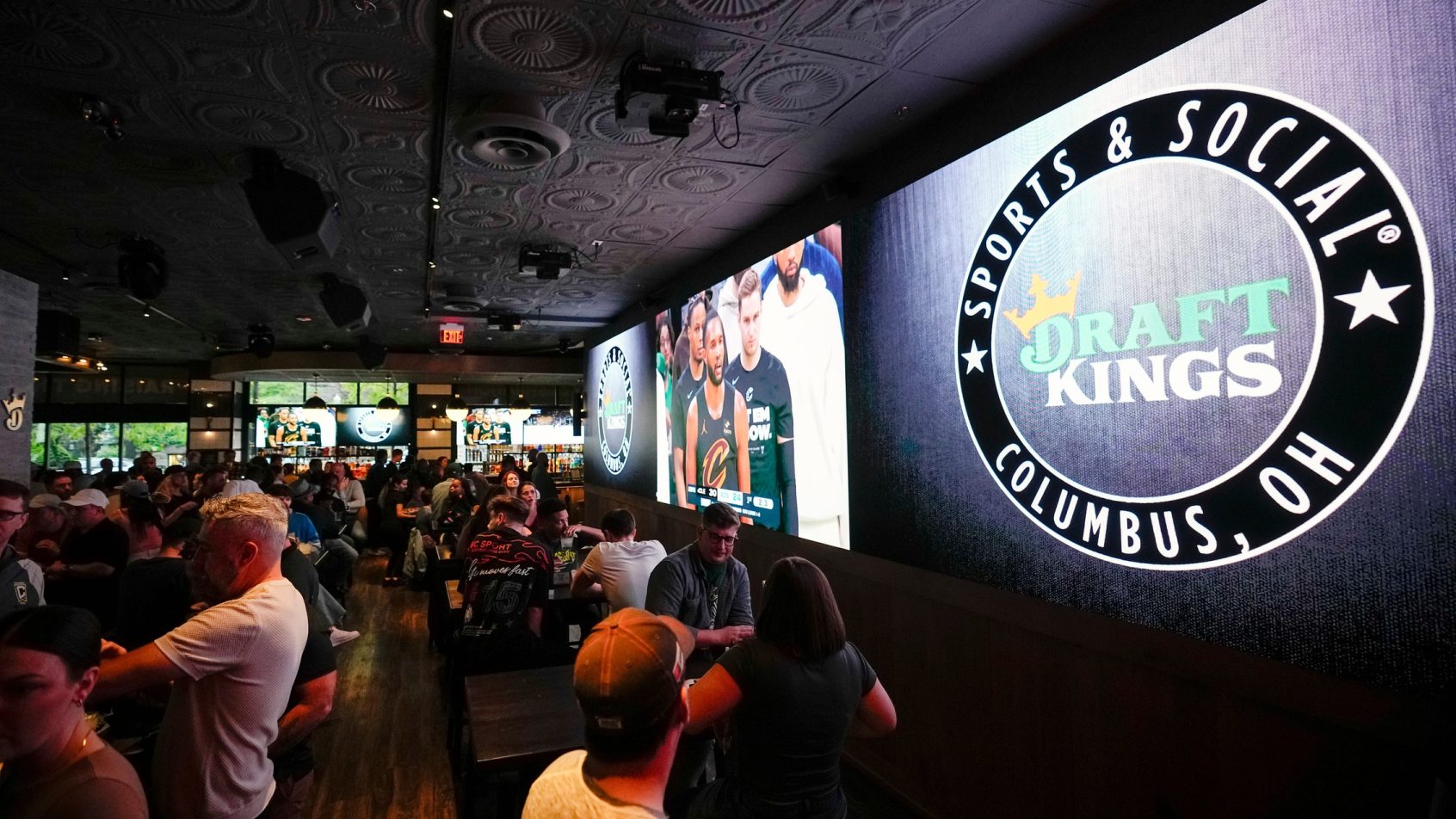
- Sports Betting Dime obtained DraftKings’ response to three Congress members seeking information on their VIP programs
- Company stressed throughout its response that it does not offer VIP membership to users exhibiting problem gaming signs or actively in a cool-off period
- DraftKings did note one VIP user received a personalized video from New York Knicks guard Miles McBride from their VIP host
Sports Betting Dime obtained DraftKings‘ recent response to Sen. Richard Blumenthal (D-Conn.) and U.S. Reps. Paul D. Tonko (D-NY) and Valerie P. Foushee’s (D-N.C.) line of questioning regarding its VIP programs, stressing it does not target users exhibiting problem gaming signs or those who are more likely to lose for its Dynasty Rewards program.
The three Congress members sent letters to BetMGM, Caesars, DraftKings, Fanatics, Kalshi, and Polymarket, seeking more details about each of the companies’ VIP programs and potential exploitation of vulnerable bettors. The Congress members requested responses to their questions by Nov. 5.
“DraftKings does not target anyone based on indicators of potential problem gaming, nor does it seek to identify the customers most likely to lose and get them to bet more. Importantly, responsible engagement restrictions are applied to exclude certain customers from receiving marketing communications from DraftKings. DraftKings maintains a list of customers who are ineligible to receive promotions, based on criteria (referred to as ‘ineligibility attributes’) including self-exclusions, ‘cool-offs’, other responsible engagement restrictions, and universal opt-outs from gaming-related communications,” DraftKings noted in its response to Congress.
VIP Program Restrictions in Place
In their letter, the lawmakers requested details on the number of clients enrolled in each VIP program, average loss/gain of bettors prior to being enrolled, average loss/gain of bettors after being enrolled, how many bettors have attempted to cut back their activity but were offered perks instead, and how much revenue each company has earned through its VIP program.
The Congress members also requested information on the use of artificial intelligence to track and target gamblers with perks, if VIP managers are trained to develop personal relationships with their clients to encourage more gambling, and a full list of perks, offers, and services (including personalized videos) provided in VIP programs.
Additionally, information on the review process customers have to undergo before being offered a VIP membership was requested.
DraftKings informed the Congress members that every customer receives direct access to the company’s “My StatSheet” program, which provides them with easy access to track and review their personal play activity in real time. DraftKings said nearly half of its users – 13 million unique total visits – viewed their “My StatSheet” information.
The company also wrote that it keeps an updated list of customers who are ineligible for its VIP program, including those who have opted for self-exclusion, are in an active cool-off period, other responsible engagement restrictions, and those who have opted into universal prohibitions from gaming-related communications.
“Simply put, customers under active self-exclusions, cool-off periods, responsible engagement suspensions, or bans are not eligible for DraftKings’ promotions, and do not receive promotional communications,” the company wrote.
Customers returning from a “cool off” period or self-exclusion do not receive proactive promotional communications for 30 days.
VIP hosts, DraftKings notes, are required to escalate customers exhibiting potential signs of problematic play to the DraftKings’ Responsible Engagement Team for further review.
Losing Bettors Not Targeted
In a response to a question regarding the use of artificial intelligence, DraftKings said it never uses the technology to identify customers who are more likely to lose to get them to bet on their platforms more.
“DraftKings does not use AI to identify the customers most likely to lose and get them to bet more, nor does DraftKings use AI to target customers based on indicators of potential problem gaming. DraftKings uses data science and machine learning, not generative or agentic AI, to target promotions based on customer preferences, a basic marketing practice. The vast majority of our promotions are site-wide offers,” they noted.
About 80% to 90% of offers are site-wide offers, the company estimated. The mechanics are the same for each user, but the amount of promotion can vary.
The remaining 10% to 20% of promotions are offered to cohorts of customers or by hosts to individual customers.
“A cohort is a group of customers who share one or more defined characteristics—such as similar behavior, preferences, or engagement patterns—for operational purposes and so they can be analyzed together rather than individually. Some are selected using rules written by DraftKings employees, such as a NFL promotion that is offered only to customers who have used the DraftKings: Sports & Casino app in the last 14 days and bet on NFL games.”
NBA Athlete Video Sent to VIP User
DraftKings did reveal a VIP host sent a personalized video message to a client from New York Knicks guard Miles McBride. The Cameo video, the company noted, is the only personalized content from a professional athlete or major celebrity sent to a VIP member as an incentive they could identify.
“As a general practice, DraftKings does not rely upon personalized content from professional athletes or major celebrities as an incentive for eligible DraftKings Rewards customers. We are only aware of the loyalty team sending one Cameo of Miles McBride – an American professional basketball player for the New York Knicks – to a customer.”
The Congress members began their VIP program inquiries with FanDuel earlier this summer after it was revealed a FanDuel VIP host used a Cameo video from Bryce Harper as an incentive for a VIP user.
The politicians sent letters to MLB and MLBPA in early August, urging the associations to end the practice of allowing professional baseball players to participate in VIP sports betting program sponsorships, according to reports from the Philadelphia Inquirer. Their letter referenced a FanDuel VIP host sending a personalized Bryce Harper video to customer Terry Thompson in November 2024.
Thompson allegedly lost $1.5 million on the platform over the course of several years. Thompson received the video as part of a perk for being a member of FanDuel’s VIP sports betting program. The Inquirer received a copy of the video from Thompson’s lawyer, who filed a lawsuit against both FanDuel and DraftKings earlier this year, alleging the companies used their games and VIP programs to keep Thompson gambling despite an obvious addiction.
Harper released a public comment on the incident in July, reporting that he did not know the video would be used for a commercial purpose. He also posted the Cameo contract he received from the FanDuel rep on his personal Instagram account.
Other Responses Unknown
A Fanatics Betting and Gaming spokesperson confirmed the company did respond to the Congress members line of questioning about its VIP program, but declined to provide the responses at this time to Sports Betting Dime.
Inquiries regarding responses from Caesars, BetMGM, Kalshi, and Polymarket were not returned.
Regulatory Writer and Editor
Robert Linnehan covers all regulatory developments in online gambling and sports betting. He specializes in U.S. sports betting news along with casino regulation news as one of the most trusted sources in the country.