Experts Describe Lack of Education and Services For College Students Affected By Problem Gambling

By Robert Linnehan in Industry
Published:
- The Subcommittee on Higher Education and Workforce Development held a hearing on sports betting on college campuses
- Four expert witnesses described real problems of sports betting addiction for students, but a lack of education and services to deal with it
- Prediction market sports event contracts and individual college prop betting identified as factors leading to rise in college campus gambling
The rate of college students who bet on sports is rising nationally, but colleges and universities do not have the necessary services or programs to address the issue, according to a House subcommittee hearing on sports betting on college campuses.
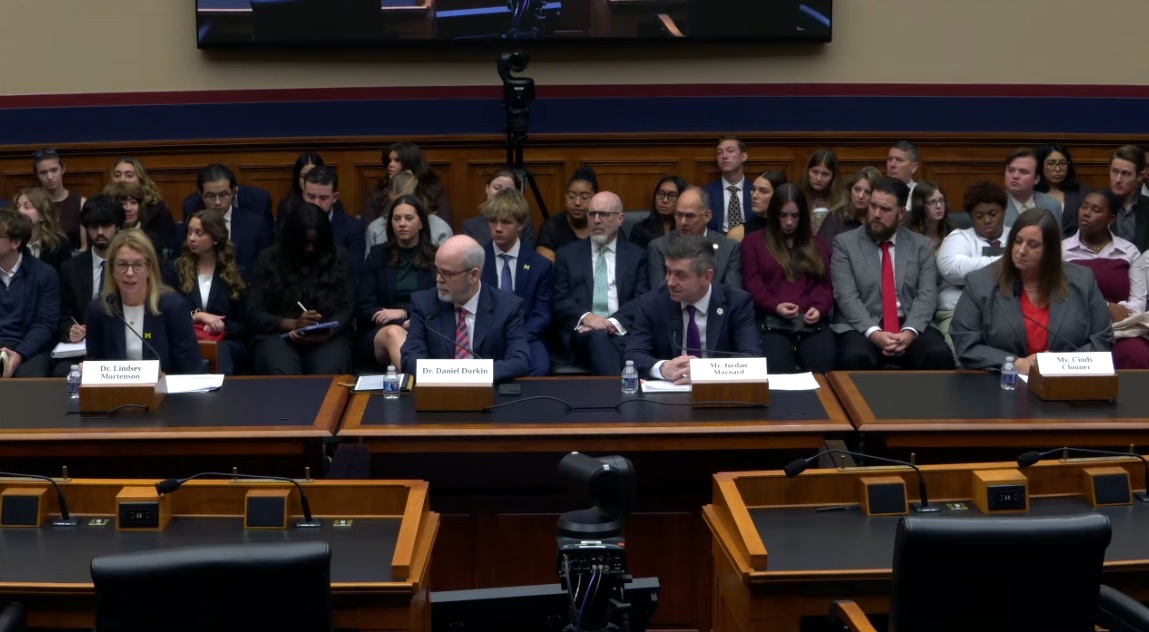
Four expert witnesses today described the rising dangers of problem gambling rates among college students participating in sports betting to the House Subcommittee on Higher Education and Workforce Development. While more students are participating in sports betting, and prediction market sport event contract trades, colleges are left scrambling to deal with an issue that hardly existed 10 years ago.
“Nowhere has the surge of online betting been more pronounced than college campuses. Young people, and young men in particular, gamble at outsized rates. According to an NCAA survey, 67 percent of students living on campus had bet on sports, and 16 percent had shown problem gambling behaviors such as ‘chasing losses’ or spending more money on bets than they planned. Six percent of students reported they had lost more than $500 in a single day. Those figures are from 2023 and are likely even higher today,” Rep. Michael Baumgartner (R-WA) said during the hearing.
Common Occurrence on College Campuses
The hearing welcomed four expert witnesses to detail the prevalence of sports betting on college campuses since the repeal of PASPA in 2018.
Lindsey Mortenson, Chief Mental Health Officer, Clinical Assistant Professor of Psychiatry, and Executive Director of University Health & Counseling, University of Michigan; Daniel Durkin, Associate Professor, University of Mississippi; Jordan Maynard, Chair, Massachusetts Gaming Commission; and Cindy Clouner, MPH, LSW, OCPS, Managing Director, Higher Education Center for Alcohol and Drug Misuse Prevention and Recovery, The Ohio State University, addressed the subcommittee about the ever increasing problem facing college students and student-athletes.
This generation of college students, Mortenson said, are on pace to become the largest problem gambling generation in U.S. history. Despite the fact that so many students are affected by problem gambling, few, if any, reach out to university counseling or therapy services for help.
“It’s easy to miss gambling problems: there are no telltale physical symptoms or blood tests, clinicians often don’t ask about it, and patients are often embarrassed to mention it. Money can
be a source of shame. Clinical appointments are often brief and filled with other important concerns. The time constraints are real. And because problem gambling often co-occurs with other conditions like alcohol use disorder, depression, anxiety, and ADHD, it may not come up right away, or at all. This is why gambling disorder is called ‘the hidden addiction.’,” she said.
It is not a rare phenomena. Clouner pointed to recent national data from the Rutgers University Center for Gambling Studies 2026 National Prevalence Study, which found that 61.3% of current college undergraduates and 68.2% percent of graduate students reported gambling in the past year.
Additionally, 43.1% of undergraduate students exhibited “some degree of gambling related risk,” she said.
Students rarely seek out help for problem gambling behavior, Durkin said. The University of Mississippi has available services and counselors to address sports betting addictions and gambling harms, but as of Nov. 5, 2026, the university counseling center had received only six gambling-related referrals, most of them from parents.
“That does not mean only six students need help. Others may be receiving care elsewhere, may not recognize a problem, or may hesitate to ask. It is possible that many students may perceive their difficulties as solely a financial problem. The low referral count nonetheless raises a practical question: How do we reach students who are unlikely to walk into a counseling center and say they have a gambling problem?” he asked.
Maynard reported that Massachusetts Gaming Commission studies have shown that 71% of people age 18 to 25 in the state have bet on sports. A national study, he said, shows that 34% of people age 18 to 20 have placed a bet on sports.
“We know the younger someone starts betting, the more likely they are to develop a gambling problem,” he said.
More Pressure to Gamble, Lack of Services to Help
The rise of online sports betting and the prevalence of prediction market companies and their sports event contract offerings have made gambling easier for college students to engage in than ever before.
Underage students use VPNs or parent sports betting accounts to access online sports betting platforms, and prediction market companies allow those who are 18 years of age to participate in a service that is identical to sports betting, Maynard said.
Prediction markets, such as Kalshi and Robinhood, bypass regulatory frameworks and forgo necessary responsible gaming measures that licensed sports betting operators must adhere to in each state, Maynard said.
Despite the ease of access to sports betting through online sports betting and prediction market platforms, colleges lack the necessary resources to deal with the rising problem. A 2026 pilot study by the Higher Education Center for Alcohol and Drug Misuse Prevention and Recovery showed only one out of every three higher education institutions in Ohio have problem gambling prevention programs in place, Clouner said.
Additionally, at under-resourced institutions or campuses with no dedicated health promotion personnel, gambling harm prevention remains either absent or consisting of nothing but passive messaging and ad-hoc programming, she reported.
No More College Prop Bets
All four expert witnesses testified that the elimination of individual college player prop bets would help reduce problem gaming among college sports bettors. The elimination of college player prop bets would reduce a popular sports betting market, while also reducing sports betting harassment for student-athletes.
It’s a common sense decision, Mortenson said, and would also help maintain credibility of college sports by potentially reducing temptations to effect the outcome of games or individual performances for the purposes of sports betting.
College player prop bet prohibition should be a federal concern, Clouner noted. State patchwork for this issue is not enough of a deterrent, and a national bill should be approved to ban the particular sports betting market.
Regulatory Writer and Editor
Robert Linnehan covers all regulatory developments in online gambling and sports betting. He specializes in U.S. sports betting news along with casino regulation news as one of the most trusted sources in the country.