UPDATE: Indiana Gaming Commission Needs More Time to Consider College Player Prop Bet Ban

By Robert Linnehan in Industry
Published:
- The Indiana Gaming Commission today tabled a motion to prohibit college player props in the state
- The NCAA spoke in front of the gaming commission asking for the prohibition to help better protect student athletes from sports betting harms
- Several representatives of the sports betting industry defended the practice of allowing college player props
The Indiana Gaming Commission needs additional time to consider a potential prohibition that will reshape its sports betting landscape.
The Indiana Gaming Commission today unanimously tabled a request from the NCAA to prohibit college player prop bets from its sports betting market in order to evaluate and gather more information on the subject. The commission will next consider the motion during its scheduled September meeting.
“We all agree, we want a safe and prosperous ecosystem. I don’t know yet how to do that, how to fairly balance compliance and commerce in this particular instance today,” Indiana Gaming Commission member B.R. Lane said during the meeting.
What’s Best for College Athletes?
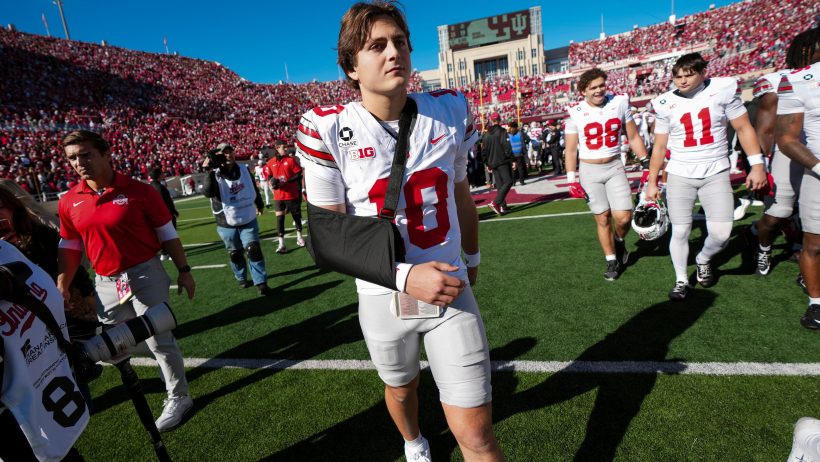
The NCAA submitted an official petition to the Indiana Gaming Commission to officially prohibit college player prop bets from its sports betting landscape. Currently, 19 other states have instituted a prohibition on this type of bet, Tim Buckley, NCAA Senior Vice President for External Affairs, told the commission.
“We have extensive data collected from all 566,000 student athletes competing across the country. We know for a fact that almost half of D-1’s men’s basketball players have reported really terrible stuff being directed their way on social media. We know, because we screen for this type of activity, that it’s related to betting and it’s quite often related to their prop bets. Often times, a play, a move, by a single athlete that has no bearing on the outcome of game can change a prop bet. We know that athletes are being harassed, not only in person and in the stands, but by those online by people who have a betting interest in that,” Buckley said.
The NCAA submitted letters from Butler University, Indiana University, and Purdue University supporting the potential college player prop prohibition.
Sports betting has become ingrained in the sports landscape, Scott Dolson, Vice President and Director of Intercollegiate Athletics of Indiana University, wrote in a letter supporting the ban to the commission. However, bets tied to the performance of a single college athlete carries risks that are less pronounced in team-based betting and places an individual athlete directly at the center of attention.
“And when a student athlete’s individual performance become the object of a bet, that student-athlete may become the target of the harassment and abuse that follow a losing bet, which is amplified by the ease of access that social media provides,” Dolson noted.
An NCAA spokesperson told Sports Betting Dime that the association will continue to pursue the prop betting ban in the Hoosier State.
“Player prop bets threaten competition integrity and subject student-athletes to increased exposure to harassment and abuse. The NCAA will continue to pursue crucial reforms to protect college sports and looks forward to working with the Indiana Gaming Commission to provide additional information about the risks associated with player props and the need for prompt elimination,” the spokesperson said.
Banning Props Undermines Athlete Protections
Representatives of the sports betting industry spoke to the commission and decried any forms of college player harassment tied to betting.
However, according to Scott Ward, counsel for the Sports Betting Alliance, banning individual college player prop bets will not eliminate harm or sports betting harassments .
“However, banning prop bets does not eliminate the harm. It simply eliminates the visibility by driving bettors to unregulated markets where prop bets are already readily available. That deprives this commission of important data and insights critical to ensuring the integrity of the sports betting market here in the state,” he said.
Sara Tait, Senior Vice President, Head of Legal, Regulated Industries at Fanatics Betting and Gaming, pointed to social media as a driving influence of athlete harassment. College sports fans will remain on social media regardless of any regulatory actions, she said.
Harassment is better addressed through targeted measures, not sports betting bans. Legislation or enforcement actions aimed directly at the perpetrators of harassment are “more effectively and appropriately tailored, Tait said.
“Social media, not sports betting, is the primary driver of harassment and harassment is the crux of the NCAA’s argument, not the integrity of our sports betting activity. The rise in normalization of social media has made players more accessible. This is especially true of college athletes who live on, or near, campus and they engage heavily with social media. Social media inherently brings risk of harassment, stalking, and other problematic behaviors,” she said.
She pointed to Fanatics Sportsbook’s recently unveiled Bad Actor Program, which monitors social media for sports betting harassment and bans users found to be engaging in the behavior, as a better deterrent than an outright ban.
Additional Consideration Needed
Despite hearing nearly an hour of testimony from the NCAA and the sports betting industry, the Indiana Gaming Commission unanimously agreed it needs more time before making its ultimate decision. The Indiana Gaming Commission will next discuss the motion during its Thursday, Sept. 24 meeting.
Commission member L. Scott Pejic said the decision was too difficult to make after just one day of discussion.
“There is a delicate balance between the interest of the NCAA and the Sports Betting Alliance. I don’t think it would be prudent…I don’t think we should make a decision in a rush,” he said.
The commission will allow both the NCAA and sports betting industry representatives to again present their sides at the September meeting.
Regulatory Writer and Editor
Robert Linnehan covers all regulatory developments in online gambling and sports betting. He specializes in U.S. sports betting news along with casino regulation news as one of the most trusted sources in the country.