Ohio Governor Says Action Forthcoming Against Prediction Market Operators

By Robert Linnehan in Industry
Published:
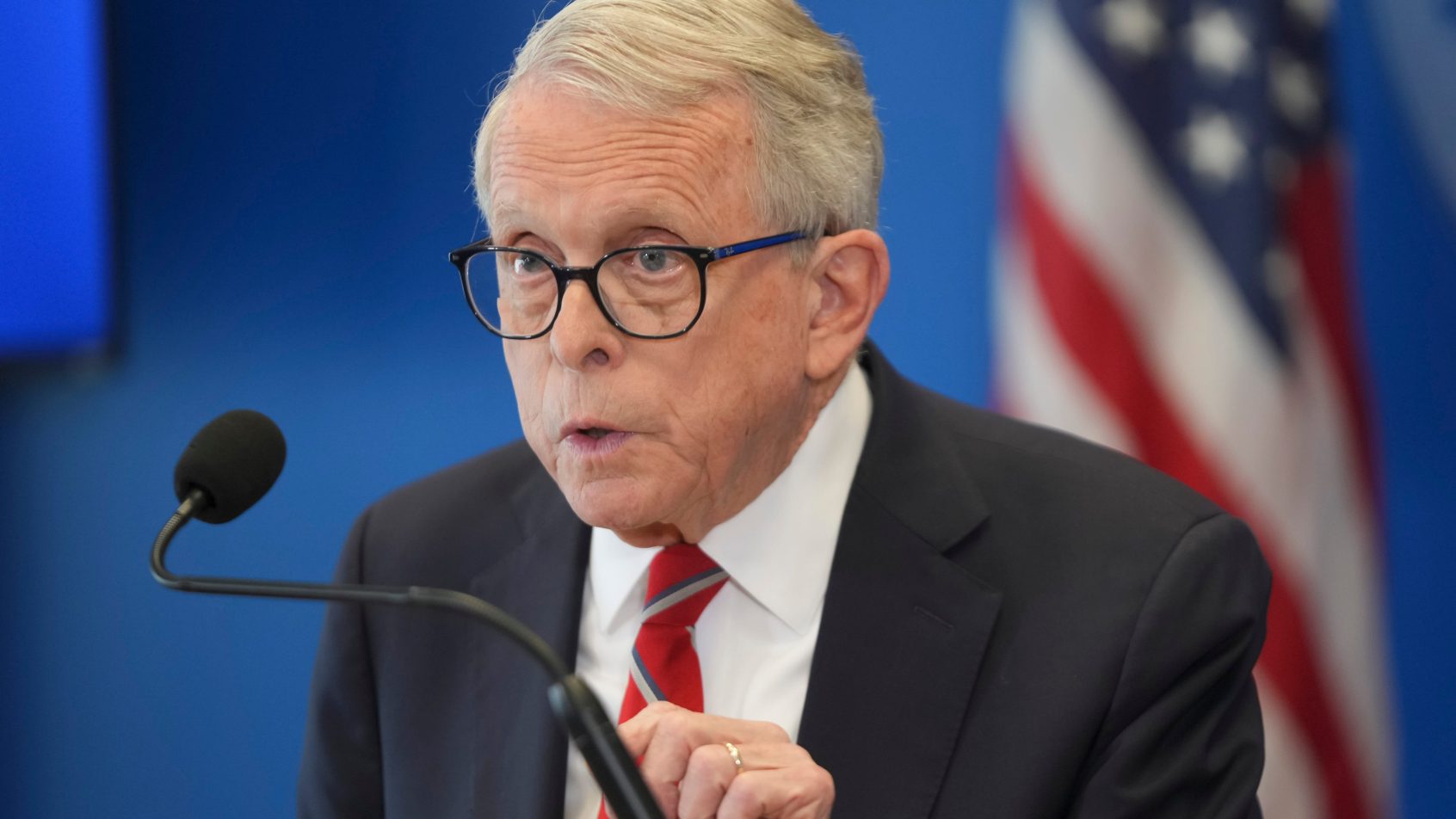
- Ohio Gov. Mike DeWine said action is forthcoming on prediction market operators not adhering to cease-and-desist orders
- Gov. DeWine said Ohio Attorney General Andy Wilson will file suits if operators do not listen to orders
- The Ohio Casino Control Commission sent 10 cease-and-desist notices to prediction market operators last month
Ohio Gov. Mike DeWine (R) reported action will be forthcoming against prediction market operators not adhering to cease-and-desist notices sent out by the Ohio Casino Control Commission.
According to Statehouse News Bureau, DeWine recently told reporters Ohio Attorney General Andy Wilson will begin filing suits against prediction market operators who have yet to adhere to 10 cease-and-desist notices sent out by gaming regulators to prohibit the trade of sports event contracts in the Buckeye State.
“The law is very clear. The court decisions have been very clear. The attorney general of Ohio is taking actions he needs to take. These are not self-executing. You have to actually go out and file these suits, and that’s what we are going to do,” DeWine said according to Statehouse News Bureau.
Operators Still Active in Ohio
DeWine pointed to 10 cease-and-desist notices sent to prediction market operators by the Ohio Casino Control Commission in late September, ordering the cessation of sports event contracts in the state. The letters cited a recent ruling from the Sixth Circuit Court of Appeals in which the court ruled Ohio could enforce its state gaming laws against Kalshi.
The OCCC ordered the following operators to cease offering sports event contracts in the state by no later than Friday, Oct. 16:
- Underdog
- Gemini Titan
- Coinbase
- Prophet X
- Novig
- Robinhood
- Polymarket
- Plus500
- Moomoo
- Webull
Noticeably, Kalshi is not one of the 10 operators to receive a cease-and-desist notice, most likely do to Ohio’s ongoing litigation against the prediction market operator.
As of Tuesday, Oct. 20, most of the operators still seem to be offering sports event contracts in the state. When asked to comment on the cease-and-desist notice, a Robinhood spokesperson provided the following statement:
“As we’ve previously shared, Robinhood’s event contracts are federally regulated by the CFTC and offered through Robinhood Derivatives, LLC, a CFTC-registered entity, allowing retail customers to access prediction markets in a safe, compliant, and regulated manner.”
Each notice informs the operator that its sports event contracts are tantamount to sports betting in Ohio. Any operator offering sports betting must be licensed to do so, according to the OCCC.
“Because Polymarket is offering unlicensed sports gaming and bookmaking or facilitating bookmaking in Ohio, the Commission demands that Polymarket cease and desist from offering, participating in offering, or facilitating those who offer sports event contracts in Ohio. This includes soliciting or accepting orders for sports event contracts listed on DCMs from persons located in Ohio, as well as operating an FCM or DCM that offers sports event contracts to persons located in Ohio. Polymarket shall notify the Commission in writing no later than fourteen (14) days following the date of this letter that it has complied with this cease-and-desist notice,” OCCC Interim Executive Director Andromeda Morrison wrote in Polymarket’s cease-and-desist notice, the same wording she used for each notice.
Failure to adhere to the notice can result in the OCCC pursuing all administrative, civil, nuisance, or criminal actions related to the issue.
Polymarket Sues Ohio in Response
In response to the cease-and-desist notice, Polymarket filed a lawsuit against the OCCC and Wilson seeking to prevent imminent and irreparable harm. According to the lawsuit, Ohio’s cease-and-desist notice to Polymarket violates the U.S. Constitution’s Commerce Clause, as well as being preempted by the Commodity Exchange Act.
Counsel notes in the lawsuit that Ohio has declared it a felony to offer “sports gaming” in the state without a license issued by the OCCC. Few licenses, however, are available to go only to those with an in-state physical presence. The OCCC takes into account how much of a physical presence a license applicant has in Ohio, the duration of the applicant’s in-state present, as well as the extent of “any expenditures for physical infrastructure” within the state.
“Assuming a license were available, Polymarket US’s operations would not just have to be run from Ohio, see Ohio Admin. Code 3775-9-02(C); Ohio Rev. Code § 3775.11(C)—they would be limited to serving only those physically present in Ohio, cutting the company off from the rest of the United States…These discriminatory, balkanizing measures violate the Constitution’s promise of open, interstate commerce. And, under settled precedent, they are unlawful,” Polymarket counsel noted in the lawsuit.
Polymarket is requesting a preliminary and permanent injunction against the state, plaintiff’s attorneys’ fees and costs incurred in bringing the lawsuit, and any other relief within the court’s discretion.
Regulatory Writer and Editor
Robert Linnehan covers all regulatory developments in online gambling and sports betting. He specializes in U.S. sports betting news along with casino regulation news as one of the most trusted sources in the country.