Senate Committee Grills Sports Betting, Prediction Market Reps on U.S. Sports Integrity

By Robert Linnehan in Industry
Updated: September 18, 2026 at 4:28 pm EDTPublished:
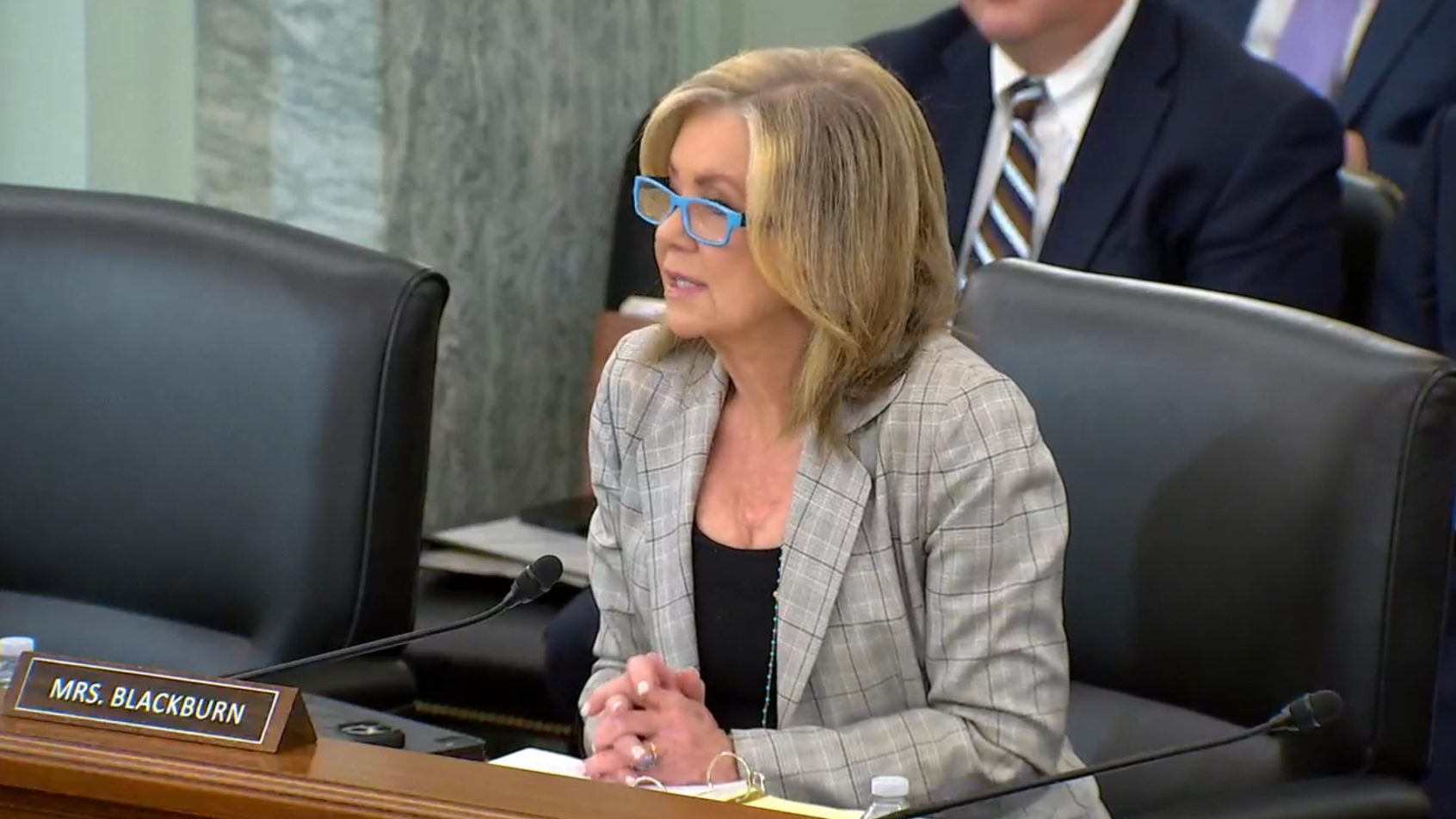
- Members of the U.S. Senate Committee on Commerce, Science, and Transportation today held more than a two-hour hearing on sports integrity
- State regulators, sports betting and prediction market representatives, and problem gambling policy advocators were grilled by the U.S. Senate
- Questions still remain as to who has the power to regulate prediction markets, if sports event contracts are sports betting, and how sports integrity can be maintained
Members of the U.S. Senate Committee on Commerce, Science, and Transportation today grilled state gaming regulators, sports betting and prediction market representatives, and problem gambling policy advocates for nearly two-and-a-half hours on how the integrity of U.S. sports can be protected amidst the rapid expansion of sports betting and prediction markets.
Led by Sen. Marsha Blackburn (R-Tenn), committee members hammered representatives with questions regarding the integrity of the U.S. sports landscape in the presence of sports betting and prediction markets, the dangers of advertising policies that may expose underage citizens to sports betting, and if states should have a say in the regulation of prediction markets and sports event contracts.
“While prediction markets represent financial innovation across many sectors, there are real concerns that they function much like traditional sports betting without enforcement of state regulators and attorneys general,” Blackburn said.
Prediction Markets Face Criticism
When Americans watch their favorite sports teams, Blackburn said, they should not have to worry about whether the game is rigged or has been manipulated by bad actors. They should not worry about their favorite player purposefully missing a free throw “to make an extra buck on the side.”
There are serious concerns, Blackburn reported, with the ability of prediction market operators to ensure malicious actors do not manipulate outcomes of specific sports betting matchups.
State regulators and gaming commissions, Sen. John Hickenlooper (D-CO), have the necessary experience and technology to accurately monitor for suspicious betting activity and actions that may tip off a market being manipulated. He questioned the experience of prediction market operators to do the same, noting the Commodity Futures Trading Commission (CFTC) has “no experience in regulating sports betting.”
This should be concering, he noted, when 90% of trades on Kalshi and 40% of trades on Polymarket are on sports event contracts.
Prediction markets seemed to take most of the heat from the bipartisan committee members during the hearing, as Patrick McHenry, a former House Representative of North Carolina and the current Senior Advisor for the Coalition for Prediction Markets, had to field numerous questions related to responsible gambling and if federal regulations are enough to protect sports event contracts from manipulation. McHenry defended prediction market operators and their ability to protect their markets, noting operators are beholden to extensive federal regulations that they must follow to be licensed.
Prediction market operators, he said, are federally regulated and overseen by the CFTC. They operate under extensive compliance obligations, real time surveillance, know-your-customer and anti-money laundering controls, and comprehensive rulebooks reviewed by federal regulators.
“Our member companies have enhanced surveillance greater than any casino and greater than any sportsbook in the country. We do more market surveillance, we ban users on a proactive basis rather than reactive basis, and we have a different business model that says no matter what happens with the contract there is a small fee to the exchange as opposed to a sportsbook that is incentivized off of losers, not off of winners,” he said.
Predictions markets do not face the same level of regulations as state licensed online sports betting operators, Bill Miller, President of the American Gaming Association, said at the hearing. Licensed sports betting operators are subjected to even greater comprehensive state regulations in order to preserve the integrity of U.S. sports and their sports betting markets. Prediction market operators, he said, are not subjected to the same level of regulations, such as specific know-your-customer controls, event monitoring requirements, and allow those as young as 18 to engage in sports betting.
“So called prediction market platforms jeopardize the integrity of sports. States, tribes, regulators, leagues and operators are working together to improve consumer protections and to reinforce responsible gaming. Our process protects the integrity of sports. Why prediction markets don’t want to play by these rules, that’s for them to explain,” Miller said.
Mary Beth Thomas, Executive Director, Tennessee Sports Wagering Council, state gaming commissions have extensive regulations in place to keep sports betting customers safe and to prevent market manipulations.
The Tennessee Sports Wagering Council enacted rules to prohibit college player prop bets and live college prop bets when data showed they were vulnerable to potential manipulation, she said, as well as the complete prohibition of credit cards to fund accounts as means to protect consumers.
“My experience has been that legal and regulated sports betting has greatly increased the volume of data available, which has led to a higher number of incidents being reported and addressed. Any criminal behavior can be difficult to completely prevent, but it can be often detected, investigated, and enforced with the right tools and collaboration,” she said.
Scott Sadin, Co-Founder and Co-Chief Executive Officer of Integrity Compliance 360, said companies such as his are regularly employed to monitor events in the U.S. markets for event integrity and work closely with state regulators, gaming commissions, and professional sports leagues to share information and data regarding markets that may be overly susceptible to manipulation or are actively being manipulated by bad actors.
Are Sports Event Contracts Different From Sports Betting?
One of the biggest questions regarding sports event contracts – which is currently being debated in courtrooms across the country – is their supposed difference from sports betting markets.
Sen. John Curtis (R-Utah) pushed this question to McHenry, asking the prediction market coalition advisor to explain the difference between sports betting and sports event contracts.
McHenry said the business models between the two markets are “fundamentally different.” Sportsbooks set lines for markets they provide to customers and make a profit when the customers lose a bet. They act as the house in these transactions, he said. Prediction market operators offer sports event contracts which are traded by users on their platforms and make a simple transaction fee after each trade.
The difference between the two is negligible, Harry Levant, Director of Gambling Policy for the Public Health Advocacy Institute, told the committee. Most certainly prediction markets are gambling, he said, and have even in certain circumstance acknowledged the fact in their own advertising.
“The house makes money every single time and the public loses, that’s sports betting,” he said.
Criticizing Marketing to the Underaged
Blackburn strongly criticized both the prediction market and sports betting industry’s practice of advertising on social media and online platforms where underage users can view the pieces of marketing.
She point blank asked both McHenry and Miller if members of their organizations advertised to the underaged or advertised on social media. Both said no to advertising to underage citizens, but both said they advertised on social media.
The presence of these industries on Tik Tok or X, which is largely unregulated in terms of advertising, she said, “pulls children into the activity,” as well as manipulates their algorithms to be subjected to additional gambling advertisements.
Hickenlooper also strongly criticized the prediction market policy to allow those as young as 18 to trade on their platforms. He also pointed to the fact that Kalshi, the most popular prediction market operator in the U.S., even partnered with at 15-year-old social media influencer to promote their business.
McHenry said he was not aware of the influencer incident, but said members of the Coalition for Prediction Markets “welcome a conversation” regarding raising the minimum age for prediction market platform participation to 21.
Moving Forward
Today’s committee hearing was not about rolling back legislation in states that have legalized sports betting, Sen. Ted Cruz (R-TX) said, but to move forward and “preserve the integrity and authenticity in sports.”
Prediction markets offering sports event contracts, Cruz said, are “for all intents and purposes sports betting.” At the very least, prediction market operators should be expected to cooperate with investigations regarding potential integrity issues.
“The opportunity to make money can tempt gamblers, and sometimes athletes themselves, to guarantee a sure bet,” he said.
Cruz also seemed to take issue with McHenry’s assertion that sports event contracts, including individual games, have a “significant economic impact,” such as impacting t-shirt sales or the local economy of a city whose team makes the playoffs. At one point during the hearing, Cruz asked McHenry “what is the economic impact of whether a pitcher throws a ball or strike on their next pitch?”
“It’s up to the consumer to decide that under the swaps definition,” McHenry answered. “And it will be for the courts and for Congress to decide if they like that.”
Future Regulations Possibly Coming
Blackburn concluded the hearing by saying the testimony shared today will potentially be used for future rulemaking and regulations moving forward. She thanked the witnesses for their testimony on the subject.
“This does allow us to start to build where we should move in regulation, and also looking at the division between what should be federal and what should be state and preserving those state rights in order to move forward with this,” she said.
Regulatory Writer and Editor
Robert Linnehan covers all regulatory developments in online gambling and sports betting. He specializes in U.S. sports betting news along with casino regulation news as one of the most trusted sources in the country.