Michigan Senate Odds After Debate: Trade on Politics Prediction Markets
By Paul Lebowitz in Politics News
Published:
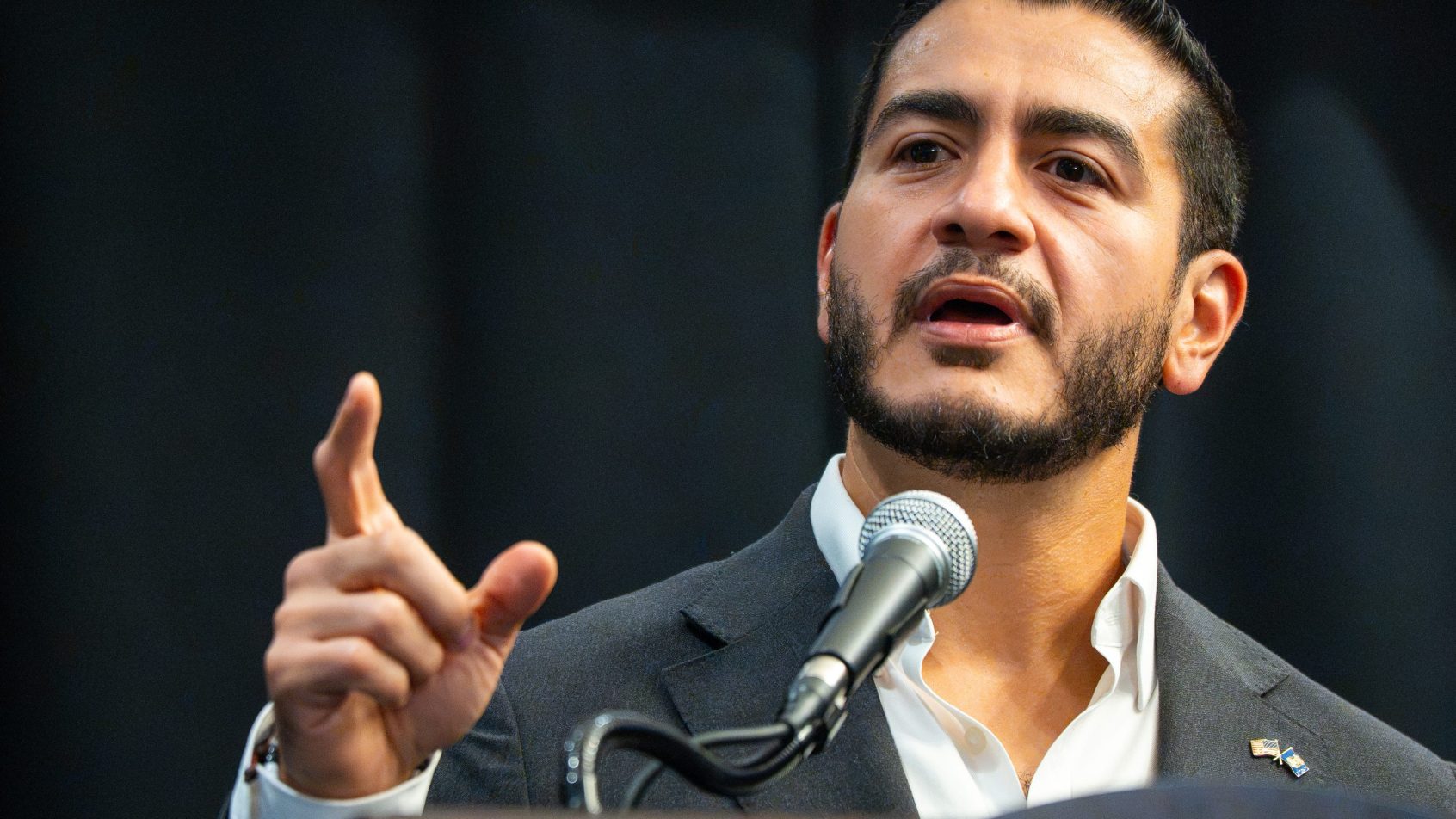
- Michigan Senate odds are a hot topic after the first official debate was held last night between Mike Rogers and Abdul El-Sayed
- Control of the Senate is in the balance, and the outcome in Michigan and other toss-up states will directly impact President Donald J. Trump’s agenda over the final two years of his presidency
- Prediction markets are watching the midterms, and in particular, Michigan, with traders buying and selling positions on who they think will win the state
The 2026 midterm elections are set for Nov. 4, with multiple Senate races still up in the air, and Michigan Senate odds are one of the noteworthy stories to track. One crucial race is in Michigan with Dr. Abdul El-Sayed and former U.S. Rep. Mike Rogers grappling for the seat. The two had their first debate to replace sitting U.S. Sen. Gary Peters, a Democrat, and it was even more contentious than expected given the close nature of the race. This is viewed as one of the seats that could tip the balance of power one way or the other. Both men have positives and negatives.
The candidates were aggressive in their attacks and argued strenuously. They even continued bickering during the commercial breaks. The common denominator for both was an attempt to sway the middle-ground voters who are still undecided and inevitably make the difference in races that go to the wire.
In the debate, the candidates talked over each other and sought to categorize their opponent in a negative light that will resonate with those aforementioned swing voters. Since it is such a close contest, prediction markets are active and offer the chance to jump in and make a pick as to who will win and head to the Senate in 2027.
Michigan Senate Odds on Prediction Markets
Trading volume for this market is enormous, already having surpassed $8.5 million.
Currently, El-Sayed is at 65%; Rogers at 35%.
The tailwinds are pointing toward the Democrats winning big on Election Day, but their candidates, their philosophies, and their associations are problematic, to say the least. This dynamic is making the race in Michigan relatively wide open despite the strong belief that El-Sayed will win.
For those who want to take part, the Kalshi promo code offers new users up to a $2,000 bonus after making $25 in trades.
Abdul El-Sayed
El-Sayed is charismatic and intelligent. He has expressed his belief in vigorous democratic socialism to attract younger voters. The growing Arab community in Michigan has put him in a solid position. President Trump’s unpopularity and the fact that Michigan is generally a Democrat-leaning state boost his chances further. Still, despite Democrats having an ingrained advantage that would normally have their candidate far ahead, the statewide polls are almost universally within the margin of error, albeit with El-Sayed leading.
Polls need to be put in their proper context, especially in the Trump era when he outperformed every poll throughout his political career, with those surveyed often saying one thing and doing another. For El-Sayed specifically, the Democratic primary against Rep. Haley Stevens was much closer than the polls suggested beforehand.
El-Sayed is trying to beat back accusations of extremist ties that are against the country’s tenets. He has been critical of Israel, adding fuel to the idea that his positions have a tinge of anti-Semitism. The candidate has tried hard to mend fences with Jewish voters. How successful he is in that endeavor could mean the difference between winning and losing. There is lingering skepticism from centrists who might otherwise tilt toward the Democrat because of the extreme rhetoric of the Democratic Socialist wing, a wing that El-Sayed is unashamedly part of.
The looming presence over El-Sayed’s candidacy, controversial streamer Hasan Piker, was not mentioned in the debate. But he is sure to be repeatedly referenced over the final few weeks as long as El-Sayed refuses to break from him completely, choosing instead to pull back slightly from him without an outright repudiation. If the race tightens as it surely will, expect that denouncement in the waning days. The question is whether those precious few voters who could go either way will take El-Sayed at face value in that denunciation or believe what Trump, Rogers, and the GOP will say: “He’s not really backing away from Piker. He’s saying it to get your vote.”
The market is heavily behind El-Sayed overcoming those obstacles, presumably due to the conventional wisdom of midterms favoring the party in opposition and Trump’s unpopularity.
Mike Rogers
The veteran pol Rogers has the benefit of being predictable. His main negative is his connection to Trump and that he repeatedly denied the 2020 election results. He has backed away from the president on Iran, ICE, and tariffs on neighboring Canada. In most ways, he’s a conventional Republican and is a “known” known. The electorate will be fully cognizant of what they’re getting from Rogers. That is not the case with El-Sayed.
Regardless of Rogers advocating for the walking back of several of Trump’s policies that he would normally have fully supported, it’s safe to assume that he’ll do essentially what the president wants if he’s in office. In addition, Trump won the state twice in his three runs for president. It’s not as if he was the ideal candidate in any of those races, but there was a pragmatism among the state’s voters that they trusted him more than they did either Sec. Hillary Rodham Clinton or Vice President Kamala Harris. At worst, they knew what to expect from him.
Will that hold sway for Rogers? A voter who enters the booth saying, “I’d vote for Generic Democrat X but can’t vote for this El-Sayed given his connection to communists and that Piker guy,” holds their nose and flips the switch for Rogers could be the difference in a tight race.
Market probability has him far behind, but that only gives a greater chance at profit to those who think safety will win out and the undecideds will break toward Rogers.
The next few weeks will make the debate look like a friendly chitchat between old pals as the GOP prepares an onslaught of Piker-connected ads against El-Sayed, and the Democrats attach Rogers to Trump at every opportunity.
Both markets offer good profit, but for a person willing to take risks and aware of the power of fear of the unknown, Rogers might be the wiser pick.
Paul Lebowitz is a novelist, columnist, social commentator, and the author of eight published books on baseball – one novel and seven baseball guide/previews. He covers sports, politics, and pop culture. Paul graduated from Hunter College with a degree in English. He lives in New York City.