Maine Senate Kalshi Markets Show Democrat Lead Increasing
By Paul Lebowitz in Politics News
Published:
- With the midterm elections less than two weeks away, the race to represent Maine in the U.S. Senate is one of the most competitive in the country
- The Democrats are increasingly enthusiastic about their prospects of taking both the House of Representatives and the Senate, with Maine slowly becoming an expected gain
- The Maine Senate Kalshi market is highly popular, with users keeping a close eye on how it is trending and many taking the opportunity to weigh in
The midterm elections are coming up fast, and the Maine Senate Kalshi market has seen millions of dollars traded on who users think will win the congressional seat.
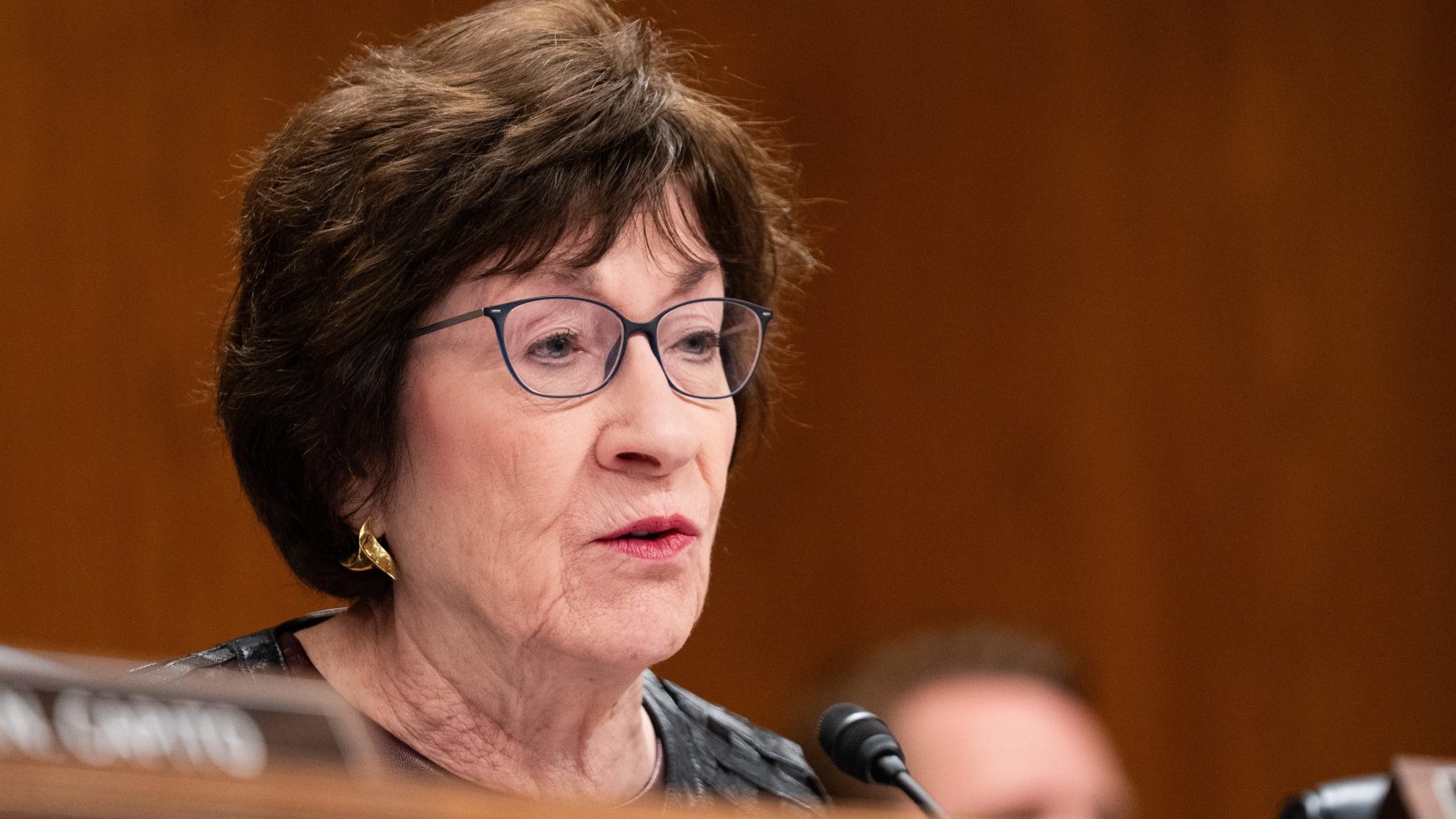
Maine is notoriously independent. Some would even go so far as to refer to the state as “quirky.” With that, it can be tricky to gauge where its heart lies during election years. As the midterm elections approach and it is more of a referendum on President Donald J. Trump than it is a straightforward, party-line-based process, many longtime incumbents like Sen. Susan Collins are seeing their position grow tenuous.
The polls have consistently had Collins behind Democrat Troy Jackson by, on average, about 3 percentage points. That is within the margin of error. Still, when looking at the race based on momentum, it is tilting towards the Democrat.
Simply saying “the Democrat” is not done by accident. The combination of how the country is trending, the general unhappiness with Trump, and Collins being branded as largely ineffectual while perhaps overstaying her welcome all suggest that Jackson is irrelevant in the race as long as he avoids unforced errors. It will either be a vote for or against Collins.
Prediction markets are offering options for investors to dive in on this competitive race and have a chance at garnering profit.
Maine Senate Kalshi Markets Show Democrat Lead
There is heavy trading volume on this market, with more than $14.5 million already having been invested.
Jackson’s market probability lead is now at about 65%. Collins is at 35%.
For those who want to take part in this market, the Kalshi promo code offers new users a $55 bonus after completing $25 in trades.
Troy Jackson (D)
An increasingly desperate Collins campaign is repeatedly bringing up Jackson telling the Senator to “shut up” during their recent debate. Those who watched it will see that it wasn’t a scary man yelling at an older woman to keep her mouth shut. It was an “Oh, shut up” to a silly remark. The tone was what one would say to an irritating sibling or a wailing dog. There was no malicious intent. He might have been better off saying, “Oh, stop” as a dismissive response, but this isn’t what they’re making it out to be, and it’s indicative of the GOP’s predicament.
The 58-year-old Jackson isn’t exactly the ideal Democratic candidate considering the party’s hard left lean, with the self-described Democratic Socialists trying to take over the party and putting up candidates who adhere to that ideology in the Michigan Senate race and other, lower-level races. But the Maine Democrats had a candidate like that in Graham Platner, and he imploded.
They’re better off with the objectively dull Jackson.
He’s not perfect. This is a candidate who was a Republican, became an Independent, and then a Democrat. He’s obviously flexible in his positions. But, again, that doesn’t matter in this race. He’s a generic Democrat: pro-choice and for basic Democratic principles in helping the middle class.
All he needs to do from now to Election Day is avoid a disastrous misstep. Should he do that, simply not being Susan Collins should be enough for him to win.
Susan Collins (R)
Collins is a relative centrist for the GOP. She has had a contentious relationship with Trump and voted to convict him when he was impeached after the incidents of Jan. 6, 2021.
Suffice it to say she will not be visiting Mar-a-Lago anytime soon, whether she’s in the Senate or not. That aside, Trump was smart enough not to try and get her tossed from the race in a primary, knowing how destructive that would be for his agenda.
For every Trump overstep, Collins presented a grandmotherly, “Hopefully he’s learned his lesson.”
Trump is six years older than Collins, and he’s never learned a lesson to stop him from doing what he wants in the 80 years he’s been on Earth. He’s not starting now.
The two have an understanding, and the Maine voters seem to be tired of it; tired of her.
This is a problem for Collins in a year when a large portion of the electorate across the nation has had its fill of Trump, putting ruby red states like Texas in play. Maine is a blue state that looks at its candidates before voting for them and is willing to vote for what it views as reasonable Republicans. In short, it doesn’t automatically vote blue. Collins has been elected to the Senate five times. Given the metrics and the state’s iconoclastic streak, the time is ripe for her to lose. Although the numbers suggest it could go either way, it seems to be consistently moving away from Collins to vote for Jackson AKA “Not Collins.”
The implied probability heavily favors Jackson, but it’s not so high that investors will be denied profit by picking him. He’s likely to take the seat as the voters retire Collins before she was ready to retire on her own.
Paul Lebowitz is a novelist, columnist, social commentator, and the author of eight published books on baseball – one novel and seven baseball guide/previews. He covers sports, politics, and pop culture. Paul graduated from Hunter College with a degree in English. He lives in New York City.