Congress Members Expand VIP Program Information Demands to Six More Companies

By Robert Linnehan in Industry
Published:
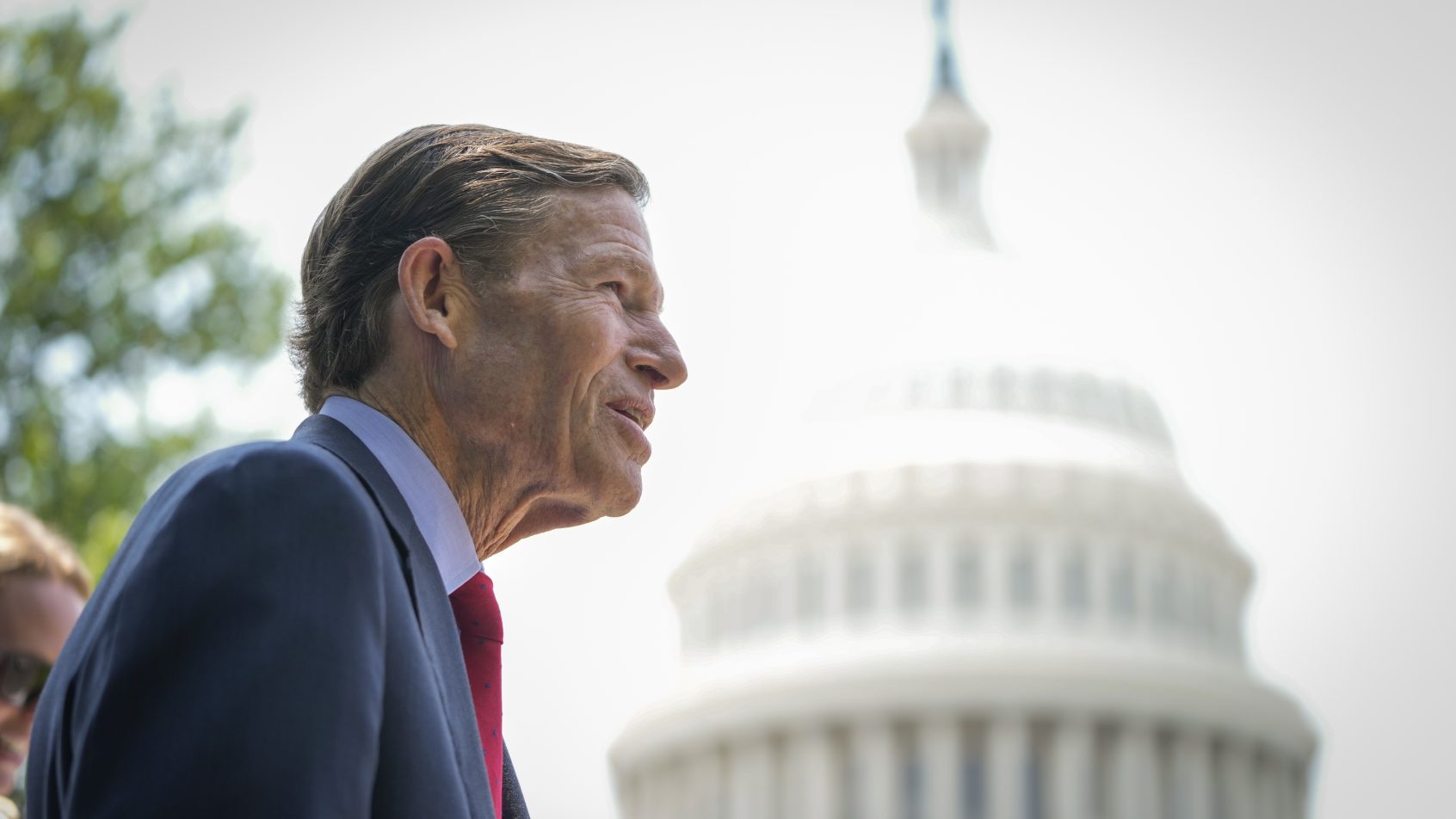
- Three Congress members today sent requests to six additional sports betting and prediction market operators for more information on VIP programs
- Requests were sent to BetMGM, Caesars, DraftKings, Fanatics, Kalshi, and Polymarket
- Sen. Richard Blumenthal (D-Conn.) and U.S. Reps. Paul D. Tonko (D-NY) and Valerie P. Foushee (D-N.C.) have raised concerns over VIP programs
Sen. Richard Blumenthal (D-Conn.) and U.S. Reps. Paul D. Tonko (D-NY) and Valerie P. Foushee (D-N.C.) today “demanded answers” from several major sportsbooks and prediction markets regarding their VIP programs.
In letters sent today to BetMGM, Caesars, DraftKings, Fanatics, Kalshi, and Polymarket, the three Congress members are seeking more details about the companies’ VIP programs and potential exploitation of vulnerable bettors.
The Congress members have already made repeated requests to FanDuel for VIP program information since the summer.
VIP Programs at Center of Controversy
The letters are similar to those the Congress members have already sent to FanDuel. The politicians requested answers to six questions regarding the companies’ VIP programs, asking for responses no later than Nov. 5, 2026.
“As repeated stories from exploited gamblers and media reports have vividly documented, VIP programs are driving the gambling industry’s most susceptible customers into debt and addiction through rewards tied to waging ever-increasing amounts of money. The dangling of perks—which include access to exclusive events, videos from celebrities and athletes, and tickets to the Super Bowl—distract bettors from their financial losses and encourage betting when they otherwise would not,” the lawmakers wrote.
In their letter, the lawmakers requested details on the number of clients enrolled in each VIP program, average loss/gain of bettors prior to being enrolled, average loss/gain of bettors after being enrolled, how many bettors have attempted to cut back their activity but were offered perks instead, and how much revenue each company has earned through its VIP program.
The Congress members also requested information on the use of artifice intelligence to track and target gamblers with perks, if VIP managers are trained to develop personal relationships with their clients to encourage more gambling, and a full list of perks, offers, and services (including personalized videos) provided in VIP programs.
Additionally, information on the review process customers have to undergo before being offered a VIP membership was requested.
“Unsurprisingly, VIP programs have been at the center of controversy in both independent investigations as well as litigation filed by victims of the gambling industry. FanDuel, for instance, offered one of its VIP customers a personal message from Philadelphia Phillies first baseman Bryce Harper at the height of their addiction. In addition, recent reporting from ProPublica revealed that DraftKings rewarded a journalist who imitated clear signs of problem gambling—including chasing losses, placing nonstop microbets, and betting on obscure events—with a VIP membership. Making matters worse, prediction markets are now enticing bettors with similar reward programs,” the lawmakers wrote.
Started With FanDuel
The Congress members began their VIP program inquiries with FanDuel earlier this summer. The politicians sent letters to MLB and MLBPA in early August, urging the associations to end the practice of allowing professional baseball players to participate in VIP sports betting program sponsorships, according to reports from the Philadelphia Inquirer. Their letter referenced a FanDuel VIP host sending a personalized Bryce Harper video to customer Terry Thompson in November 2024.
Thompson allegedly lost $1.5 million on the platform over the course of several years. Thompson received the video as part of a perk for being a member of FanDuel’s VIP sports betting program. The Inquirer received a copy of the video from Thompson’s lawyer, who filed a lawsuit against both FanDuel and DraftKings earlier this year, alleging the companies used their games and VIP programs to keep Thompson gambling despite an obvious addiction.
Harper released a public comment on the incident in July, reporting that he did not know the video would be used for a commercial purpose. He also posted the Cameo contract he received from the FanDuel rep on his personal Instagram account.
The Congress members then requested FanDuel cease its VIP sports betting program in a letter sent to the company on Aug. 10
In October, the lawmakers requested more information on 30 personalized video messages sent to VIP bettors over the course of the last two years.
The Congress members addressed the issue in a letter sent to FanDuel earlier this week, “demanding” the company provide copies of each of the personalized videos as well as information about whether the videos were sent to problem gamblers. The letter is in response to one sent to Congress members by FanDuel Senior Vice President Cory Fox on Sept. 24, in which the FanDuel executive acknowledged it had sent approximately 30 videos of athletes and entertainers over the last two years as “token of appreciation for a customer’s loyalty.”
This week, Fox reported the videos were for “customer-appreciation” purposes and were not sent to induce continued gambling.
“Like customer-loyalty programs in many industries, the VIP program is intended to provide enhanced service and encourage customers who choose to wager to use FanDuel rather than another platform. FanDuel remains committed to ensuring that customer-appreciation efforts operate consistently with its responsible gaming obligations and internal controls,” Fox wrote.
The personalized gestures, Fox wrote, are subject to the company’s “broader responsible gaming framework.” This framework includes automated and manual tools to identify customers who may exhibit gambling-related harm, such as real-time check-ins and machine learning to flag deposits that are inconsistent with a customer’s established deposit patterns, Fox noted.
Regulatory Writer and Editor
Robert Linnehan covers all regulatory developments in online gambling and sports betting. He specializes in U.S. sports betting news along with casino regulation news as one of the most trusted sources in the country.