Former CFTC Chair, Tribal Associations, and State Attorneys General Argue For Ohio Sports Betting Authority

By Robert Linnehan in Industry
Published:
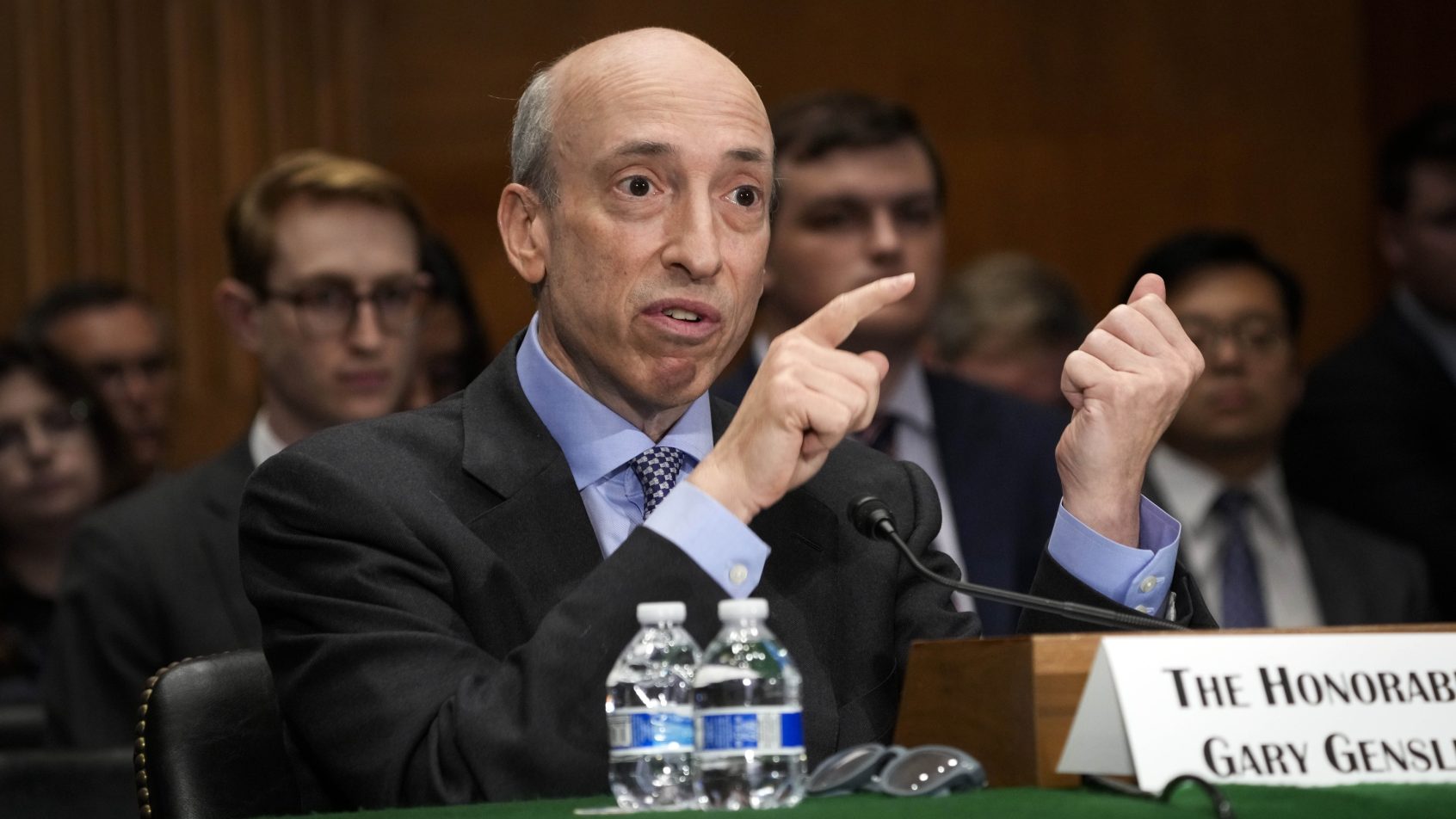
- Former CFTC and SEC Chairman Gary Gensler, numerous tribal associations, and state attorney generals recently submitted amicus briefs in support of Ohio
- The briefs were submitted in support of Ohio in Kalshi’s lawsuit against the state
- The CFTC previously filed an amicus brief in support of Kalshi
Former Commodity Futures Trading Commission and Securities and Exchange Commission Chairman Gary Gensler, 30 Native American Tribes and 11 tribal associations, and 39 states plus the District of Columbia filed amicus briefs in the U.S. Court of Appeals for the Sixth Circuit in support of Ohio.
The briefs were filed in support of the state’s authority to regulate sports event contracts within its borders. Prediction market operator Kalshi filed a federal lawsuit in October against both the Ohio Casino Control Commission and Ohio Attorney General Dave Yost for threats to shut down their event contract market in the Buckeye State.
Kalshi’s lawsuit is now in the Sixth Circuit Court of Appeals, as U.S. District Court Judge Sarah D. Morrison in March denied the prediction market company’s motion for a preliminary injunction.
Support for Ohio’s Regulatory Authority
Gensler, the former Commodity Futures Trading Commission (CFTC) Chairman from 2009 to 2014, noted in his brief that Congress never intended for its Dodd-Frank Wall Street Reform and Consumer Protection Act of 2010 to purposefully give CFTC the power to regulate gaming nationwide through sports event contracts years later.
“This case boils down to the question of what, if anything, Congress did in Dodd-Frank with regard to sports betting. Kalshi contends that, by encompassing some event contracts within the statutory definition of swap, Congress purposefully made the CFTC a nationwide sports betting regulator and denied states their traditional police power to regulate gaming, including sports betting. The answer—from someone who was there—is that Congress did nothing of the sort,” Gensler wrote in his brief.
Gensler noted that former Senate Majority Leader Harry Reid of Nevada, a key proponent of the bill, would not have consented or accepted legislation to displace an activity “so critical to his state’s economy and politics by permitting sports betting only under CFTC auspices.”
The Dodd-Frank bill, Gensler wrote, was in response to the 2008 financial crisis to regulate swaps and work on reforms to deter another crisis of the same magnitude.
“Sports betting was not part of the 2008 financial crisis or the response to it. Nowhere in the Executive Branch’s list of priorities, in Amicus’s 54 appearances before Congress, in any statement of a member of Congress, or in the text of Dodd Frank was there any indication Congress sought to revise sports betting regulation,” he noted.
Utah Attorney General Derek Brown and Nevada Attorney General Aaron D. Ford, on behalf of 37 other state attorneys general and Washington, D.C., agreed in their submitted brief with Gensler that Dodd-Frank was never meant to preempt state gambling laws.
Congress, the attorneys general wrote, did not “sneak sports-gambling preemption into the Dodd-Frank Act, and this Court should confirm as much.”
“Congress must speak clearly when effecting a major change. Id. Absent a ‘clear statement,’ courts should not assume that Congress intends ‘a significant change in the sensitive relation between’ the federal and state governments in an area of ‘traditional state authority.'”
Threat to Tribal Sovereignty
Thirty tribes and 11 tribal associations – including the Indian Gaming Association and National Congress of American Indians – submitted an amicus brief claiming Kalshi’s offering of sports event contracts has threatened the “longstanding national policy of state and tribal regulation of sports betting and undermines decades of federal laws.”
Sports event contracts, tribal counsel wrote in the brief, siphons away tribal and state governmental revenue.
“For tribes, gaming is not just an economic endeavor but an existential one. Tribes have primary jurisdiction over their lands and activities occurring thereon. Tribes, like states, also have a strong sovereign interest in determining what gaming activities may take place on their lands. Thus, tribal jurisdiction extends to gaming, which the Supreme Court has long recognized.”
Congress did not repeal the Indian Gaming Regulatory Act (IGRA) when it enacted the Commodity Exchange Act’s definition of “swap” in 2010, tribal counsel noted in the brief. Kalshi argues that Congress’s definition of the term “swap” preempts “what is unequivocally sports betting.” If this is so, they note, then Congress must have intended to “repeal key provisions of IGRA that expressly grants regulatory authority over such activity to tribes, states, the National Indian Gaming Commission, Department of the Interior, and Department of Justice.”
“Contrary to what Kalshi maintains, if sports-betting contracts are ‘swaps’ subject to the exclusive jurisdiction of the Commodity Futures Trading Commission, then the Commodity Exchange Act governs all sports betting—including sports betting conducted by tribes under IGRA,” counsel wrote.
CFTC Previously Filed Brief in Support of Kalshi
The CFTC last month filed an amicus brief in the U.S. Court of Appeals in support of Kalshi, asserting the commission’s “exclusive jurisdiction” over prediction markets.
The amicus brief filed in the U.S. Court of Appeals is similar to other briefs the CFTC has filed in support of prediction markets. The CFTC asserts the CEA has provided the commission with “exclusive jurisdiction” to regulate futures, options, and swaps traded on federally regulated exchanges.
“This appeal concerns Ohio’s invocation of its gambling laws to prohibit sports-related ‘event contracts’ that are traded on CFTC-registered designated contract markets (DCMs). Ohio is not alone: States across the country have tried to seize authority over DCMs as event contracts gain popularity among Americans. Yet as the Third Circuit held, these ‘event contracts are swaps under the [CEA],’ and so it falls to the Commission—and exclusively the Commission—to regulate them. States cannot invade the CFTC’s exclusive jurisdiction by re-characterizing swaps trading on DCMs as illegal gambling,” CFTC counsel wrote in the brief.
Current CFTC Chairman Michael S. Selig said the federal district court in Ohio “took an improperly narrow view” of the CFTC’s jurisdiction when denying Kalshi’s motion for a preliminary injunction against the state.
“The federal district court in Ohio took an improperly narrow view of the Commission’s jurisdiction, and we are asking the Court of Appeals to correct that error,” Selig said in May. “As I’ve said repeatedly, the CFTC will not allow overzealous state governments to undermine the agency’s longstanding authority over these markets.”
Regulatory Writer and Editor
Robert Linnehan covers all regulatory developments in online gambling and sports betting. He specializes in U.S. sports betting news along with casino regulation news as one of the most trusted sources in the country.