New Jersey Attorney General Petitions SCOTUS Hearing For State Regulation of Sports Event Contracts

By Robert Linnehan in Industry
Updated: September 4, 2026 at 1:13 pm EDTPublished:
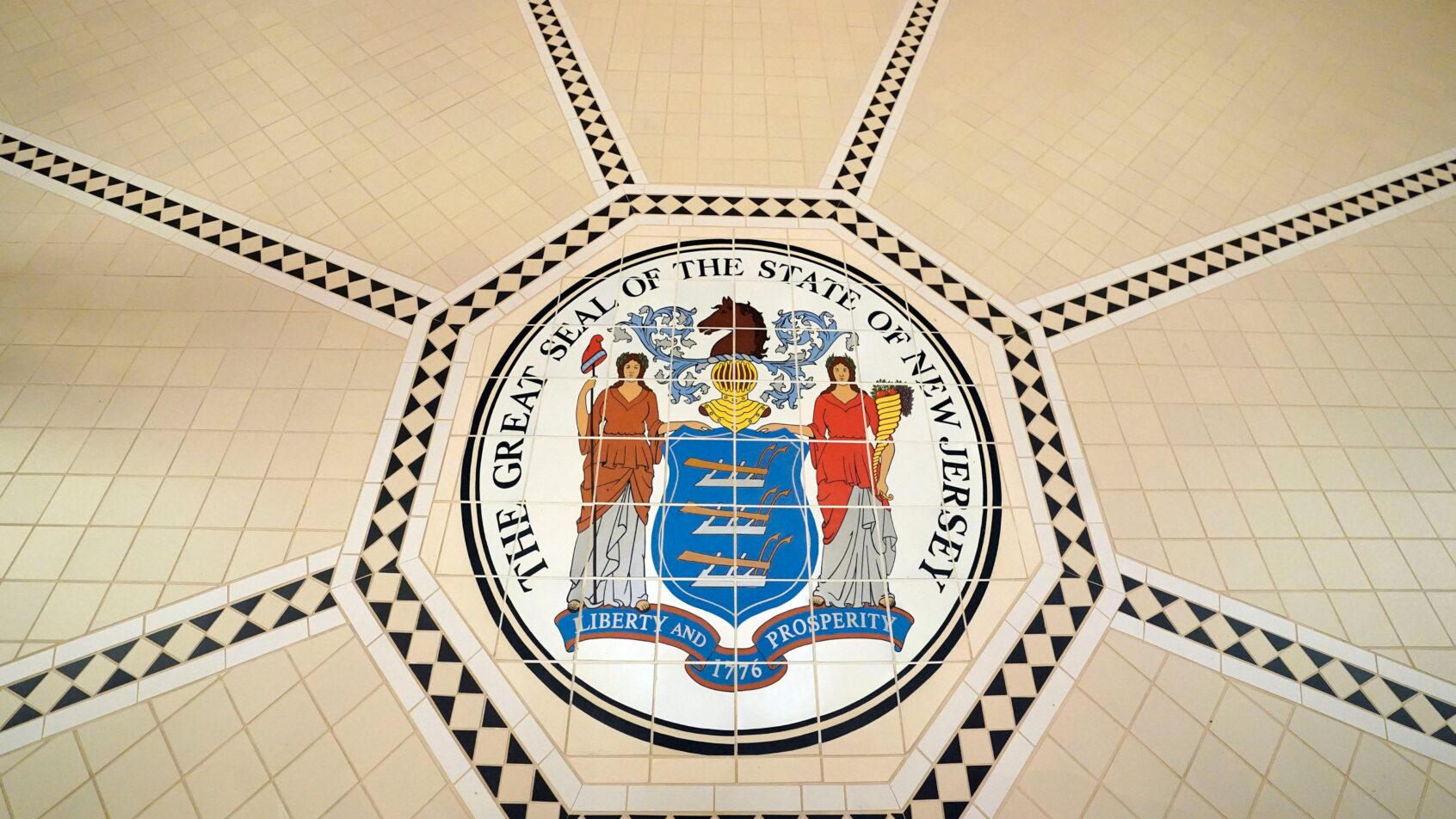
- New Jersey Attorney General Jennifer Davenport today filed a writ of certiorari with the U.S. Supreme Court
- The petition requests a SCOTUS hearing regarding state regulatory power over sports event contracts
- The Commodity Futures Trading Commission contends prediction markets can only be regulated by the federal government
And just like that the issue of state or federal regulatory control over prediction market sports event contracts may be headed to the U.S. Supreme Court.
New Jersey Attorney General Jennifer Davenport today filed a writ of certiorari with the U.S. Supreme Court, requesting the court evaluate the question of whether or not states can regulate sports event contracts through their own gambling laws.
“Companies like Kalshi claim to offer legal sports betting in all 50 States, but they refuse to follow the gambling laws of any State,” Attorney General Davenport said in a press release. “These companies have no right to offer their sports bets without following state law, which is why dozens of States across the ideological spectrum have opposed them. States have long adopted careful laws to regulate gambling, including to prevent compulsive gambling, gambling by minors, and insider trading on sports games. We’re calling on the Supreme Court to resolve this issue and recognize that Congress did not silently make the sports-betting industry immune from state law.”
Who Can Regulate Sports Event Contracts?
The filed writ of certiorari presents the following question to SCOTUS:
Whether the 2010 Dodd-Frank Wall Street Reform and Consumer Protection Act preempted States from regulating sports bets that occur within their jurisdictions if those bets are offered on markets registered with the Commodity Futures Trading Commission.
The question has been the basis of just about every piece of litigation filed by state gaming regulators and prediction market operators since last year. A final SCOTUS hearing seemed likely after the U.S. Court of Appeals for the Ninth Circuit’s recent decision to affirm a dissolved Kalshi injunction against Nevada and allow regulatory board to impose its state gambling laws against sports event contracts.
The three-judge panel voted 3-0 to affirm U.S. District Judge Andrew Gordon’s April 2025 decision to dissolve an approved Kalshi injunction against the state. However, the decision created a federal circuit split, as the U.S. Third Circuit Court of Appeals this past April ruled by a 2-1 vote that New Jersey could not regulate Kalshi’s sports event contract offerings, as they reached the CEA’s definition of a swap.
The U.S. Third Circuit ruled in Kalshi’s favor, noting that New Jersey’s gambling laws were indeed preempted by the Commodity Exchange Act (CEA).
This split has likely led to the necessity of SCOTUS to ultimately decide if states have the regulatory power to impose their own gambling laws on a product they believe is nothing more than sports betting, or if these markets were indeed federalized by the 2010 Dodd-Frank Wall Street Reform and Consumer Protection Action.
In the state’s petition, Davenport noted that SCOTUS in 2018 confirmed the rights of the states to decide on legalized sports betting for themselves, and whether or not to allow it in their borders.
“Different States have made different choices on that score. But Kalshi insists on a different approach—one where federalism has no place, and where the sports gambling laws must be the same in New Jersey as in Utah, so long as the company self-certifies its sports bets with the CFTC. As the Ninth Circuit has since observed, neither law nor logic supports the Third Circuit’s and Kalshi’s unprecedented rule. This Court should grant certiorari,” she wrote.
A Kalshi spokesperson told Sports Betting Dime that the prediction market operator cannot be regulated by 50 different regulators.
“We disagree with New Jersey’s filing. Kalshi is an open, nationwide financial exchange. It cannot be regulated by 50 different regulators. Both the Third Circuit and the District of New Jersey sided with Kalshi because the CFTC’s exclusive jurisdiction preempts state law. While New Jersey points to a recent decision in the Ninth Circuit, that decision agreed with that key principle. Where it differed, it did so based on a regulation that’s in the process of being rewritten. We remain confident in the lower courts’ rulings, and nothing in New Jersey’s filing today changes our view,” Dani Lever, Kalshi spokeswoman, told Sports Betting Dime.
If the writ is accepted by SCOTUS – and typically only 1% are accepted by the court each year – it would only be the beginning of a process that likely would not see a ruling until sometime in 2027.
Legal Fighting For More Than a Year
New Jersey, and several other states, have filed a number of lawsuit against prediction market operators to either prohibit sports event contracts or sue for the right to regulate the markets with their state gambling laws.
At least 20 states have filed lawsuits regarding prediction markets, with each lawsuit centered around the question of regulation. Prediction market operators, such as Kalshi, Polymarket, Robinhood, and Crypto.com, plus the CFTC, believe sports events are protected by the CEA, which only allow federal regulation of the markets.
State attorneys general and gaming regulators believe state gambling laws should apply to the markets, as they allege sports event contracts are nothing more than illegal, unlicensed gaming.
With numerous pieces of litigation flooding through the lower courts, it seemed all but a matter of time before SCOTUS would be petitioned to weigh in on the question of regulatory authority for prediction markets and their sports event contracts.
“This petition presents an ideal vehicle for resolving the important question whether States are prevented from regulating sports gambling merely because that gambling happens on a CFTC-registered market. This issue has led to an explosion of litigation in the lower courts and spawned immediate disagreement on this major question, including a direct, acknowledged, and irreconcilable split between the Third and Ninth Circuits,” Davenport noted in the writ.
New Jersey was one of the first states to send cease-and-desist notices to prediction market operators. The New Jersey Division of Gaming Enforcement sent cease-and-desist orders to both Kalshi and Robinhood in March 2025.
Regulatory Writer and Editor
Robert Linnehan covers all regulatory developments in online gambling and sports betting. He specializes in U.S. sports betting news along with casino regulation news as one of the most trusted sources in the country.